In the freelancing market, one fundamental truth dictates your success: your time is your inventory. Yet, a massive operational gap exists for most independent professionals the friction between manual time logging and accurate invoice generation. This is known as the Freelancer’s Dilemma.
When you are deeply immersed in writing code, designing interfaces, or drafting marketing strategies, your cognitive load is entirely consumed by the creative process. Expecting yourself to manually hit “Start” on a timer every time you open a client file, and “Stop” when you take a phone call, is unrealistic.
The byproduct of this friction is estimated billing. At the end of the day or week, most freelancers rely on guesswork to fill out their timesheets. Consequently, micro-tasks such as responding to urgent client emails, handling brief revision loops, conducting 10-minute research sprints, or jumping onto unscheduled Zoom calls go completely unrecorded. These are your hidden billable hours. You are actively working on client assets, but because the effort wasn’t captured, you cannot charge for it. Manual tracking transforms administrative upkeep into a tax on your productivity.
“Manual tracking transforms administrative upkeep into a tax on your productivity. To tackle this, choosing the right digital ecosystem is crucial; exploring dedicated apps to work from home can help you seamlessly manage tasks, organize client files, and eliminate this administrative friction.”
Data Insights: How Automated Tracking Boosts Freelance Revenue by 20%
If losing 15 minutes here and there feels inconsequential, looking at global industry metrics reveals a stark financial reality.
Independent market studies show that freelancers relying on manual tracking fail to log an average of 4 to 6 billable hours every single week. For a professional charging a standard rate of $50 per hour, this tracking leak translates to roughly $250 lost per week. Over a standard working year, that totals over $12,000 in unrecovered revenue left on the table.
Manual Tracking ➔ Relies on Memory ➔ Misses Micro-Tasks ➔ Lose ~5 Hours/Week ➔ 20% Revenue Leak ❌
Automated Tracking ➔ Background App ➔ Logs Every Second ➔ Captures All Tasks ➔ 20% Revenue Boost ✅
This financial leakage is precisely why the freelance economy is pivoting toward automated time tracking software. Unlike legacy systems that demand user intervention, intelligent background trackers initialize the moment your operating system boots up. They silently map active windows, document titles, and specific web URLs without requiring a single click.
Hard industry data validates that transitioning from a manual start/stop workflow to an automated background tracker increases a freelancer’s total billable hours by an average of 20%. Without increasing your workload, taking on new clients, or raising your rates, simply tracking every second of your actual output instantly yields a 20% bump to your bottom line. Furthermore, it generates an immutable, data-driven “Proof of Work” that builds airtight trust with your clients and eliminates invoicing disputes before they happen.
You’re Working 8 Hours… But Billing Only 6
The missing hours aren’t because you worked less they’re because you forgot to track them. Start a 15-Day Free Trial of DeskTrack and automatically capture every billable minute without lifting a finger.
Essential Checklist: What Makes a Great Freelance Time Tracker?
An effective freelance time tracker must do more than just count minutes; it must act as a revenue retention tool. When selecting a platform, ensure it ticks every box on this five-point performance checklist:
- Zero-Effort Automation: The software must offer reliable background tracking that triggers automatically upon system boot. This eliminates human error, removes the friction of manual start/stop buttons, and captures every hidden billable micro-task.
- Granular Activity Mapping: Look for an app that categorizes time down to the specific document title, browser URL, and software application being used. This granular data allows you to accurately allocate hours to corresponding client projects without guessing.
- Air-Tight Privacy Controls: Since background tracking is highly comprehensive, the tool must feature customizable privacy rules. It should allow you to easily pause tracking, set strict operating hours, or whitelist/blacklist specific personal applications and websites.
- Cross-Device Synchronization: Freelancers frequently move between desktops, laptops, tablets, and smartphones. Your chosen tracker must sync data seamlessly across Windows, macOS, Linux, iOS, and Android to prevent any gaps in your daily logs.
- Actionable Reporting & Exports: The platform should convert raw timesheets into clean, visual reports (such as CSV, PDF, or Excel sheets). These summaries must be detailed enough to serve as indisputable “Proof of Work” for client invoicing and auditing.
Comparison: Top 5 Time Tracking Software for Freelancers in 2026
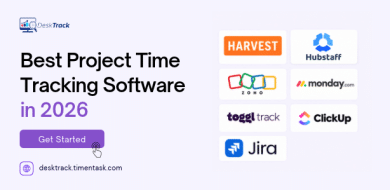
The market is filled with time logging tools, but freelancers have unique needs: you need a balance of affordability, ease of use, and accurate data. Here is the definitive, ranked breakdown of the top 5 time tracking platforms for independent professionals in 2026.
1. DeskTrack – Best for 100% Automated, Hands-Free Time & URL Logging
DeskTrack completely eliminates the administrative burden of manual logging by operating as a fully automated background tracker. It tracks your work dynamically from the moment you turn on your machine, making it virtually impossible to lose a single billable minute.
- Core Strength: Complete, zero-click automation that maps your daily workflow in the background.
- Key Feature: Document-level tracking that logs the exact files, application titles, and browser URLs you interact with.
- The Freelancer Advantage: Seamlessly links captured activities to specific client projects after the work is done, creating an effortless “Proof of Work” trail.
- Best Suited For: Freelancers managing multiple concurrent client contracts who frequently forget to toggle manual timers.
2. Toggl Track – Best User-Friendly Manual Start/Stop Timer
Toggl Track remains an industry standard for professionals who prefer absolute control over their logs via a clean, minimalist interface. Its iconic one-click timer makes manual time recording as painless as possible.
- Core Strength: Exceptional user experience across web, desktop, and browser extensions.
- Key Feature: Built-in idle detection that recognizes when you step away from your keyboard and asks if you want to discard that inactive time.
- The Freelancer Advantage: Pomodoro timer integration that helps structure your work intervals while simultaneously logging your time.
- Best Suited For: Solo creators and designers who want a straightforward, beautiful interface with simple start/stop functionality.
3. Harvest – Best for Client Invoicing & Smart Project Budgeting
Harvest is a robust workflow ecosystem designed to bridge the gap between tracking time and getting paid. It excels at turning logged hours directly into professional, line-item client invoices.
- Core Strength: Native financial features, including expense tracking and directly integrated invoicing.
- Key Feature: Live project budgeting alerts that warn you when you are nearing a client’s capped hour limit or budget threshold.
- The Freelancer Advantage: Seamless online payment collection via native Stripe and PayPal integrations built right into your sent invoices.
- Best Suited For: Retainer-based freelancers and agency contractors who regularly manage strict project budgets and billable expenses.
4. Clockify – Best Free-Forever Tracking for Beginners
Clockify has built a massive global user base by providing an incredibly generous free tier that satisfies almost all fundamental time tracking needs without a paywall.
- Core Strength: Unbeatable free-tier value with unlimited tracking, unlimited projects, and unlimited users.
- Key Feature: Flexible data entry allowing you to track time using a live timer or enter a summary manually via a calendar view.
- The Freelancer Advantage: Provides clean, basic reporting dashboards and data exports (CSV/Excel) completely free of charge.
- Best Suited For: New freelancers, students, or budget-conscious professionals who need reliable core logging without monthly subscription fees.
5. RescueTime – Best Background Tool for Productivity Insights
Unlike traditional tools focused entirely on billing, RescueTime focuses heavily on your personal digital habits. It silently records your application usage and scores how focused your work sessions actually are.
- Core Strength: Automatic productivity scoring that categorizes your activities as productive, distracting, or neutral.
- Key Feature: “Focus Sessions” that actively block distracting websites and social media platforms when you need deep work.
- The Freelancer Advantage: Delivers weekly email reports detailing exactly where your focus drifted, helping you optimize your billable efficiency.
- Best Suited For: Freelancers struggling with time management, procrastination, or burnout who want a tool focused on habit optimization rather than pure client invoicing.
Why DeskTrack is Our Top Recommendation for Freelancers
While manual timers serve basic tracking needs, modern freelancing demands an architecture that matches the speed of your workflow. DeskTrack is our top editorial choice because it shifts the entire administrative burden from the freelancer to the software. It provides a data-driven ecosystem that maximizes billable output while maintaining complete personal privacy control.
Traditional Workflow: Open Task ➔ Press Start ➔ Work ➔ Pause for Call ➔ Resume ➔ Forget to Stop ❌
DeskTrack Workflow: Boot Computer ➔ Work Seamlessly ➔ Automated AI Mapping ➔ Pure Billable Hours ✅
Feature Breakdown: Zero Manual Input & Continuous Background Tracking
The core problem with legacy time trackers is human error. DeskTrack resolves this by utilizing intelligent background tracking architecture that initializes instantly upon operating system boot.
- Zero-Click Operation: There are no start, stop, or pause buttons to micromanage throughout your workday. The software logs your activity seamlessly behind the scenes.
- Idle Hour Filtering: If you step away from your workstation for a client call, coffee break, or offline meeting, DeskTrack automatically isolates those inactive gaps. This guarantees that your timesheets contain only active, productive output.
- Offline Data Resilience: If your internet connection drops while working remotely, DeskTrack continues tracking locally on your device. It syncs perfectly to your central dashboard once connectivity is restored.
Client Transparency: Real-Time URL, App, & Document-Level Proof of Work
Hourly billing is built entirely on client trust. When a client questions a timesheet, an aggregated “5-hour block” entry offers no leverage. DeskTrack builds an ironclad, undeniable trail of accountability through granular system monitoring.
- Document-Level Precision: The software doesn’t just show that you spent three hours inside Adobe Photoshop or VS Code. It records the specific file names and project paths you actively engaged with.
- URL Tracking: Every browser link visited for client research is recorded with precise open-to-close timestamps. This gives you clean data to show exactly how much research went into a strategy or build.
- Custom Privacy Shields: Freelancers value autonomy. DeskTrack includes flexible settings allowing you to pause tracking instantly. You can easily whitelist professional tools while completely blacklisting or hiding personal windows and applications.
Cost vs. ROI: DeskTrack Pricing & Value for Solo Creators
Investing in software requires a clear return on investment. For a solo freelancer, DeskTrack offers an exceptionally low financial barrier compared to the revenue it recovers.
- Entry-Level Tier: Paid tiers begin at a highly competitive $5.99 per user/month, making it significantly more affordable than options like Harvest ($11/mo) or paid versions of Toggl Track ($9/mo).
- Revenue Recovery ROI: By tracking those elusive, unlogged 15-minute micro-tasks (client text replies, quick file exports, ad-hoc edits), the software typically uncovers 4 to 6 hidden billable hours per week. If your freelance billing rate is $40/hour, a single month of background tracking can easily recover up to $800 in lost revenue. The platform pays for its annual subscription cost within its first 48 hours of deployment.
- Risk-Free Evaluation: Freelancers can access a comprehensive 15-day free trial to audit their own habits, test the tracking engine, and view their productivity charts before committing financially.
Quick-Glance Comparison Matrix (Features, Best For, & Actual Costs)
To help you make an immediate, data-backed choice based on your freelance workflow, this structured matrix compares the actual operating costs, core features, and specific limitations of the top 5 time tracking tools side by side.
| Software | Best For | Entry-Level Cost (Billed Monthly) | Free Tier Limitations | Key Tracking Method |
| DeskTrack | 100% Automated Logging & Client Proof-of-Work | $5.99 / user / month | 15-Day Free Trial (No credit card required) | Full Automated Background Tracking (App, URL, & Doc titles) |
| Toggl Track | Minimalist Manual Timing & Visual Productivity Dashboards | $9.00 / user / month | Free up to 5 users (Lacks advanced billable rate triggers) | Manual Start/Stop Timers & Idle Detection Extensions |
| Harvest | Native Client Invoicing & Direct Project Budgeting Alerts | $9.00 / user / month | Free for 1 Seat and up to 2 active projects only | Manual Start/Stop Timers & Integrated Expense Input |
| Clockify | Budget-Conscious Freelancers Needing Free Core Tools | $5.49 / user / month | Free Forever with unlimited tracking (Advanced reports are locked) | Hybrid Tracking (Manual Timers, Calendar View, Auto-log plugin) |
| RescueTime | Blocking Distractions & Deep Productivity Habit Analytics | $7.00 / month | Limited Free Lite Version (Lacks Focus Sessions & long history) | Continuous Automated Background & App Categorization |
Matrix Implementation Insights
- For Absolute Revenue Capture: Choose DeskTrack. It delivers automated background tracking at almost half the price of tools like Harvest or Toggl Track.
- For Integrated Client Billing: Choose Harvest. If your priority is generating invoices directly from your logged hours on a single platform, it streamlines the administrative loop.
- For Zero Financial Outlay: Choose Clockify. It offers the most robust free plan for straightforward timer workflows that do not require detailed page-level document tracking.
Expert Buying Guide: How to Choose Your Ideal Time Tracker
Selecting the right time tracking software isn’t about finding the tool with the most features; it’s about aligning the software’s architecture with your specific freelance workflow. If a tool feels like a chore to use, you will eventually abandon it, resulting in lost billable hours.
Follow this three-step strategic framework to identify your ideal tracking system:
[Analyze Your Distraction Level] ➔ [Identify Billing Structure] ➔ [Select Your Automation Tier]
Step 1: Define Your Automation Threshold
Every freelancer falls into one of two psychological categories when it comes to administrative tasks:
- The Intentional Operator: You have a highly disciplined routine. You easily remember to start a clock when a task begins and pause it for a coffee break. If this is you, a clean, manual start/stop interface like Toggl Track or Clockify will give you a satisfying sense of absolute control.
- The Creative/Deep Work Specialist: You get lost in your work. You open five different browser tabs, jump to a design tool, reply to a Slack message, and completely forget that a timer is running. If manual timers cause you friction, you need a 100% automated tool. DeskTrack runs silently in the background so you can focus entirely on production without losing track of your billable hours.
Step 2: Match the Tool to Your Billing Model
Your invoicing structure dictates the level of data granularity you need to provide to your clients:
- Value-Based or Fixed-Project Fees: If you charge per project, you don’t need to show clients your exact hourly breakdown. However, you still need to track your internal time to calculate your actual profitability. RescueTime or a basic free tracker is ideal here just to monitor your personal efficiency.
- Strict Hourly Billing & Agency Contracts: If clients pay you directly for your time, you must provide verifiable proof of work. An aggregated invoice stating “Design Work: 10 Hours” can easily lead to payment disputes. In this scenario, DeskTrack’s document-level tracking and URL logging create an undeniable, auditable trail that validates every single minute invoiced.
Step 3: Assess Your Native Integration Needs
Minimize software bloat by choosing a tool that fits natively into your existing business stack:
- Need Invoicing? If you want an all-in-one platform that turns logged hours into professional invoices and processes payments, Harvest is the market leader.
- Already Have an Accounting Stack? If you already use standalone accounting software (like QuickBooks or FreshBooks), choose an affordable, dedicated tracking specialist like DeskTrack to capture the hours, then export the clean data to your billing platform.
Never Miss a Billable Minute ➡
Frequently Asked Questions (FAQ)
Ans. While Clockify offers a 100% free-forever plan for unlimited basic manual tracking, DeskTrack provides the highest actual return on investment (ROI) with its comprehensive 15-day risk-free trial. Unlike standard free timers that require continuous manual button clicking, DeskTrack tracks your workflow completely in the background. Transitioning from a free manual tracker to DeskTrack’s automated system usually helps freelancers capture 4 to 6 hidden billable hours every week. This means DeskTrack easily pays for its own entry subscription ($5.99/mo) within the first 48 hours of use, making it a much more profitable choice for professional freelancers than a completely free manual tool. Ans. Yes, you can track client time automatically by using background tracking platforms like DeskTrack or Timely. These applications initialize the moment you boot up your computer. They silently record software app usage, browser URLs, and document file titles in the background, entirely eliminating the need for manual start and stop buttons. Ans. No, reputable automated time trackers do not compromise your privacy if you configure their built-in restriction rules properly. Premium tools like DeskTrack allow you to set strict tracking schedules, manually pause monitoring at any point, and create blacklists or whitelists so personal web traffic and private applications are never logged.freelance-time-tracking