If you’ve ever reached 6 p.m. and wondered where the day actually went, you’re not alone. Most teams lose hours every week to context-switching, untracked meetings, and guesswork billing and the fix usually isn’t “work harder,” it’s simply knowing where your time is going in the first place.
That’s exactly what a good time tracking app solves. Whether you’re a freelancer trying to bill accurately, a manager overseeing a remote team, or an HR lead trying to clean up attendance records, the right tool turns vague estimates into hard data.
We spent time testing, comparing, and reading through real user reviews of the most popular time tracking apps on the market to put together this list. Below, you’ll find 15 of the best time tracking apps for 2026 including free options, employee monitoring tools, and apps built specifically for freelancers and agencies along with what each one does best (and where it falls short).
What is a Time Tracking App?
A time tracking app is software that records how much time you or your employees spend on tasks, projects, or applications during the workday. Most tools log hours automatically or through a start/stop timer, then turn that data into timesheets, productivity reports, or client invoices. Businesses use them for payroll accuracy, project costing, and remote team visibility.
Still not sure which time tracking app is right for you?
From freelancers to remote teams, find the right tool based on your workflow, team size, and tracking needs.
Comparison Table: Best Time Tracking Apps at a Glance
| App | Best For | Free Plan | Employee Monitoring | Standout Feature |
|---|---|---|---|---|
| DeskTrack | Remote & hybrid teams | Free trial | Yes | Screenshots + attendance + activity tracking |
| Toggl Track | Simplicity | Yes | No | One-click timer |
| Time Doctor | Distributed teams/BPOs | Free trial | Yes | Productivity scoring |
| Hubstaff | Field workforces | Limited free plan | Yes | GPS & geofencing |
| Clockify | Free time tracking | Yes (generous) | Limited | Unlimited users on free tier |
| Harvest | Client billing | Limited free plan | No | Built-in invoicing |
| My Hours | Freelancers | Yes | No | Free client invoicing |
| Insightful | Productivity analytics | Free trial | Yes | Workforce benchmarking |
| TimeCamp | Project budgeting | Yes (basic) | Limited | Budget alerts |
| QuickBooks Time | Payroll integration | Free trial | Limited | Native QuickBooks sync |
| Everhour | PM tool integration | Limited free plan | No | Works inside Asana/Trello/Jira |
| ActivTrak | Workforce analytics | Free trial | Yes | Burnout & risk flags |
| RescueTime | Personal productivity | Yes (basic) | No | Automatic focus scoring |
| Timely | AI automatic tracking | Free trial | Limited | AI-built timesheets |
| Connecteam | Shift-based teams | Free for small teams | Yes | Scheduling + time clock combo |
Why Businesses Need an Employee Time Tracking App
Manual timesheets are unreliable people forget, round up, or fill them in from memory at the end of the week. An employee time tracking app removes that guesswork by capturing real activity data as it happens. Here’s what that translates to in practice:
- Accurate payroll — hours worked are logged automatically instead of self-reported
- Fair, data-backed billing — clients are charged for actual time spent, not estimates
- Better project planning — you can see which tasks eat up the most time and budget accordingly
- Remote team visibility — managers get a clear picture of work patterns without micromanaging
- Reduced time theft — idle-time detection and activity logs flag gaps automatically
If you manage a distributed workforce, this is closely tied to Work From Home Monitoring Software and broader strategies for how to manage remote employees effectively.
How We Evaluated These Time Tracking Apps?
To keep this list useful rather than just a rehash of feature lists, we looked at each tool through five lenses:
- Accuracy of tracking — automatic vs. manual, and how well idle time is detected
- Reporting depth — how easy it is to turn raw hours into usable insights
- Ease of use — setup time and daily friction for both employees and admins
- Pricing transparency — whether the free plan is genuinely useful or just a trial trap
- Use-case fit — freelancer vs. small team vs. enterprise workforce
With that framework, here’s the full list.
Top 15 Best Time Tracking Apps in 2026
1. DeskTrack
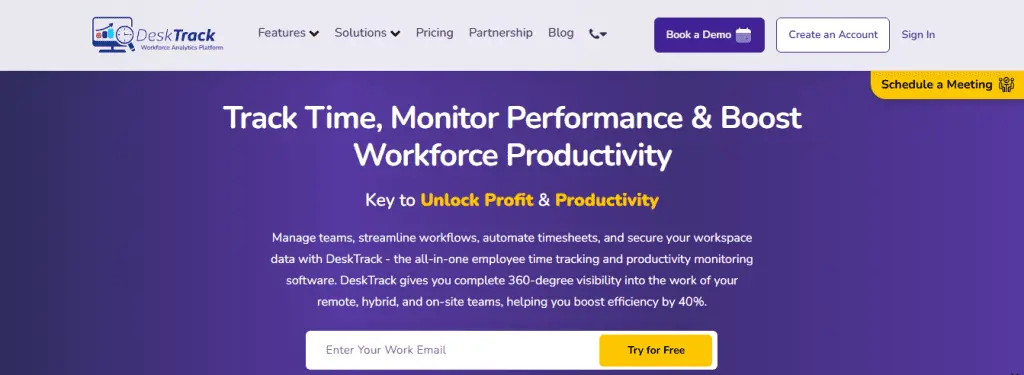
DeskTrack is built for businesses that need more than a simple stopwatch it combines automatic time tracking with productivity monitoring, screenshot capture, and attendance logging in one dashboard.
Key features:
- Automatic time and activity tracking (starts with system login, no manual timers needed)
- App and URL usage tracking to see where work hours actually go
- Screenshot Monitoring Software for visual proof of work
- Built-in Attendance Management Software with clock-in/out logs
- Offline tracking that syncs once the internet reconnects
- Detailed productivity and idle-time reports
Best for: Companies managing hybrid, remote, or on-site teams that want monitoring and time tracking in a single tool.
Consider if: You want a straightforward personal timer with no monitoring features DeskTrack is built more for teams than solo use.
2. Toggl Track
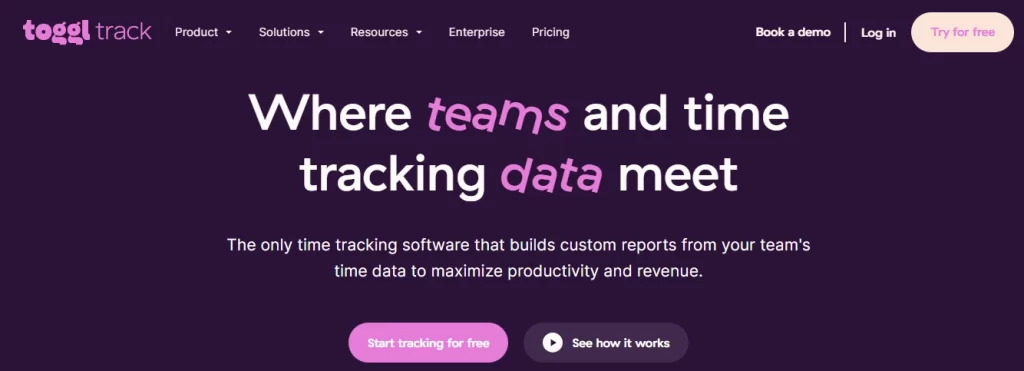
Toggl Track is one of the most widely used time trackers because it does one thing extremely well: one-click time tracking with a clean interface. It’s popular with freelancers and small teams who don’t need employee monitoring, just clean timesheets and reports.
Best for: Individuals and small teams who want a distraction-free timer.
Consider if: You need built-in screenshots or attendance tracking Toggl keeps things intentionally minimal.
3. Time Doctor
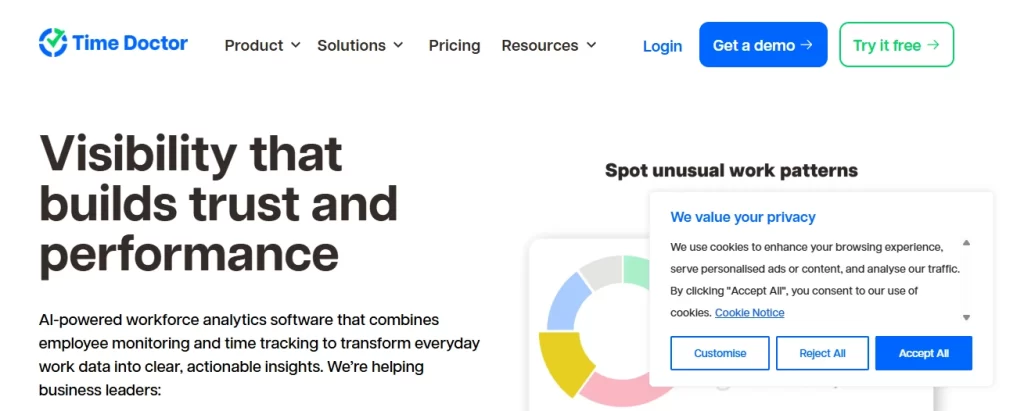
Time Doctor blends time tracking with productivity scoring, making it a common choice for outsourcing companies and agencies managing remote staff across time zones. It includes screenshots, website/app usage tracking, and payroll integrations.
Best for: Agencies and BPOs managing large remote or outsourced teams.
Consider if: Your team is small the feature set can feel like overkill for a handful of people.
4. Hubstaff
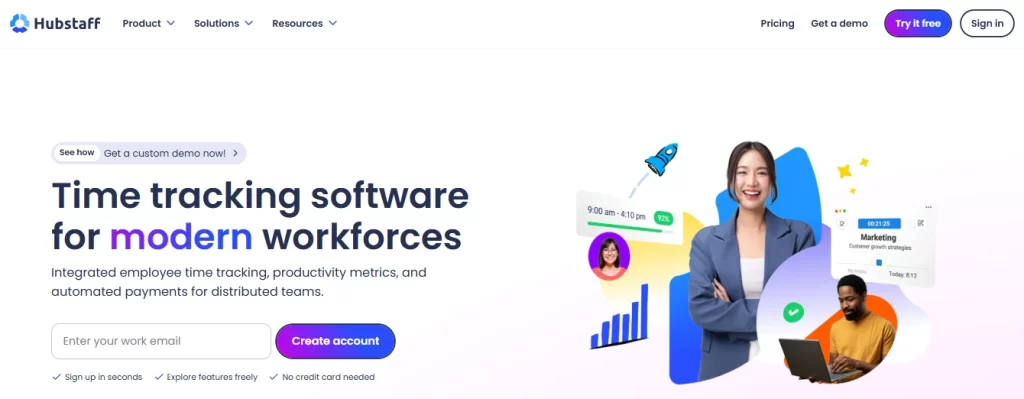
Hubstaff stands out with GPS location tracking and geofencing, making it a strong pick for teams that work outside a desk think field service, construction, or delivery staff alongside standard desktop time tracking.
Best for: Businesses with field employees who need location-based time verification.
Consider if: You only manage desk-based staff the GPS features won’t add much value.
5. Clockify
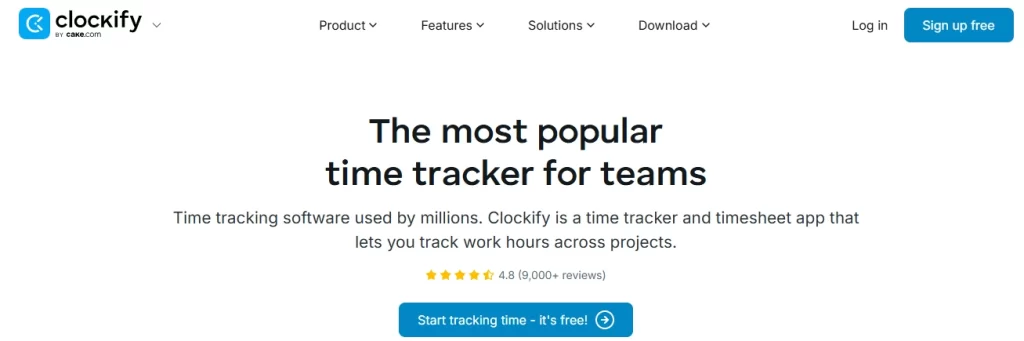
Clockify is frequently cited as the most generous free time tracker on the market, offering unlimited users and unlimited tracking on its free tier a rarity in this space. Paid plans add features like time approvals and scheduling.
Best for: Startups and teams on a tight budget that still need multi-user tracking.
Consider if: You need advanced monitoring like screenshots or activity levels those sit behind paid tiers.
6. Harvest
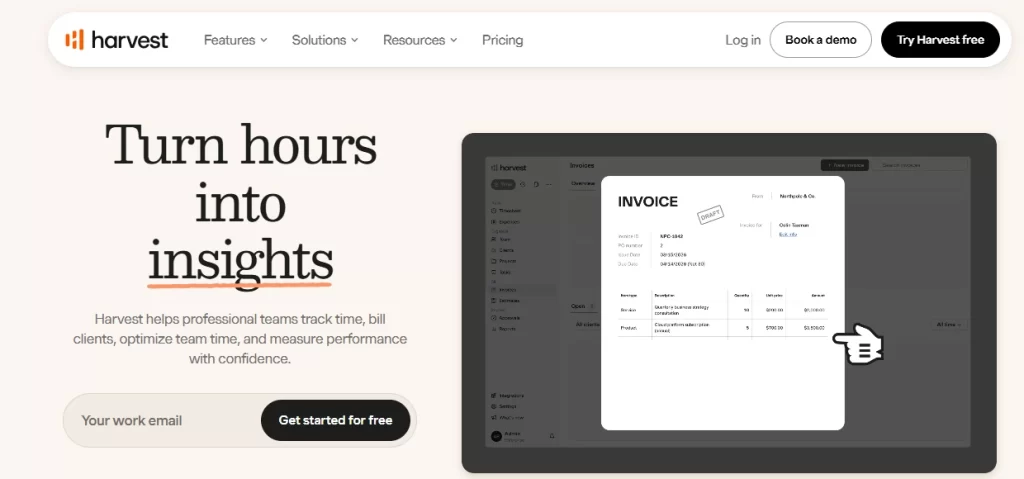
Harvest pairs time tracking with built-in invoicing, expense tracking, and integrations with accounting tools like QuickBooks. It’s a favorite for consultants and agencies that bill clients directly from tracked hours.
Best for: Freelancers and agencies that invoice clients based on billable hours.
Consider if: You need deep employee monitoring Harvest focuses on billing, not oversight.
7. My Hours
My Hours keeps things simple with project- and client-based time tracking, free invoicing, and a generous free plan for small teams. It’s built around helping independent professionals stay organized without a steep learning curve.
Best for: Freelancers and very small teams tracking billable hours per client.
Consider if: You’re scaling past a small team reporting depth is limited compared to enterprise tools.
8. Insightful

Insightful (formerly Workpuls) focuses heavily on workforce analytics productivity trends, app/website categorization, and team benchmarking making it useful for HR and operations teams that need data beyond raw hours.
Best for: Mid-size to large teams that want detailed productivity benchmarking.
Consider if: You just need basic timesheets the analytics layer may be more than you need.
9. TimeCamp
TimeCamp combines automatic time tracking with project budgeting tools, letting managers set budgets per project and get alerts when hours start running over.
Best for: Project Time Tracking Software use cases where budget control matters as much as hours logged.
Consider if: You want a lightweight personal tracker TimeCamp is built more for project-heavy teams.
10. QuickBooks Time
Formerly TSheets, QuickBooks Time is built to plug directly into QuickBooks payroll, making it a natural choice for businesses already using QuickBooks for accounting. It supports GPS tracking, scheduling, and mobile clock-ins.
Best for: Businesses already in the QuickBooks ecosystem for calculating payroll hours.
Consider if: You use a different accounting stack the integration advantage disappears.
11. Everhour
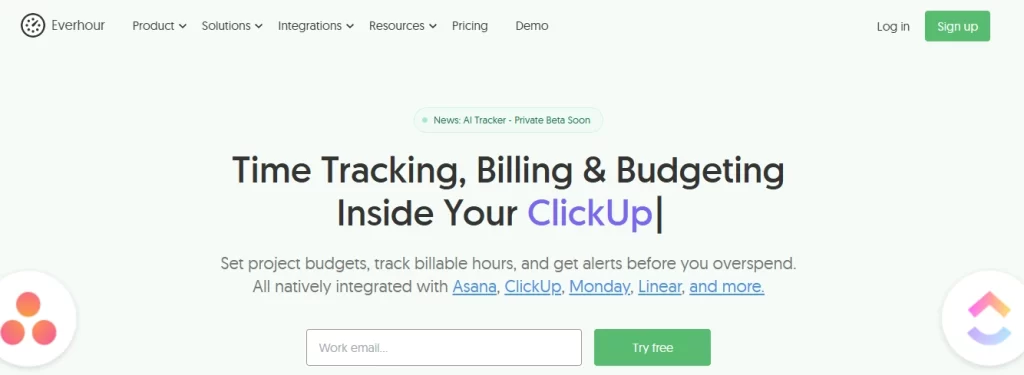
Everhour is designed to live inside tools you already use Asana, Trello, ClickUp, Jira rather than pulling teams into a separate app. It adds time tracking, budgeting, and invoicing directly on top of existing workflows.
Best for: Teams that don’t want to switch context away from their project management tool.
Consider if: You need a fully standalone app Everhour works best as a layer on top of another platform.
12. ActivTrak

ActivTrak focuses on workforce intelligence benchmarking productivity, flagging burnout risk, and giving leadership dashboards on how work actually happens across the organization.
Best for: Larger organizations wanting data-driven workforce planning.
Consider if: You’re a small team the analytics depth is built for scale.
13. RescueTime
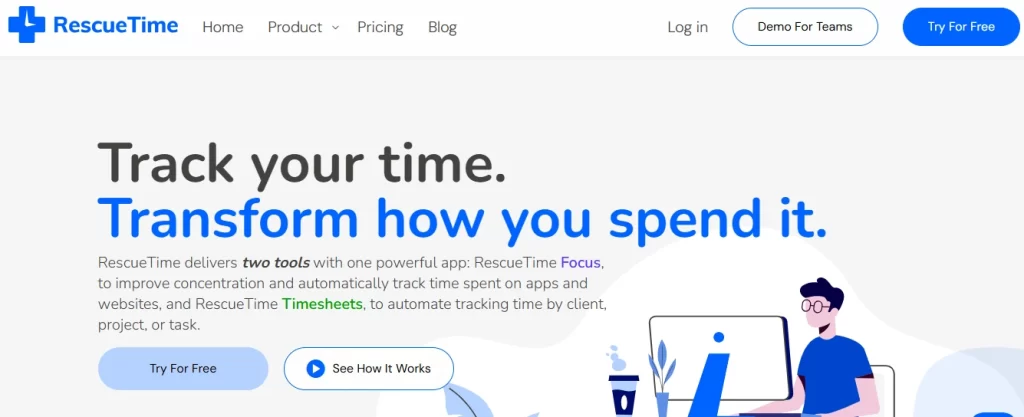
RescueTime runs quietly in the background and tracks how you personally spend time across apps and websites, then scores your day for focus and distraction. It’s less about team oversight and more about individual habit-building.
Best for: Individuals trying to improve their own focus and reduce screen distractions.
Consider if: You’re tracking billable hours for clients RescueTime isn’t built for invoicing.
14. Timely
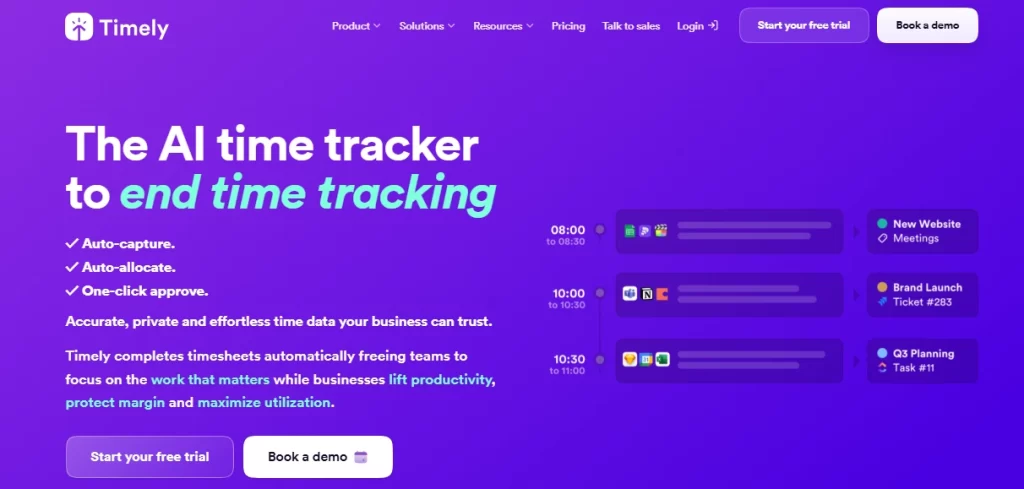
Timely uses AI to automatically build timesheets in the background, aiming to remove manual timers entirely. It then lets users review and confirm the AI-generated log rather than starting/stopping timers all day.
Best for: Teams that want automated timesheets without manual timer management.
Consider if: You want full transparency into monitoring methods the AI-driven approach is less manual but less granular.
15. Connecteam
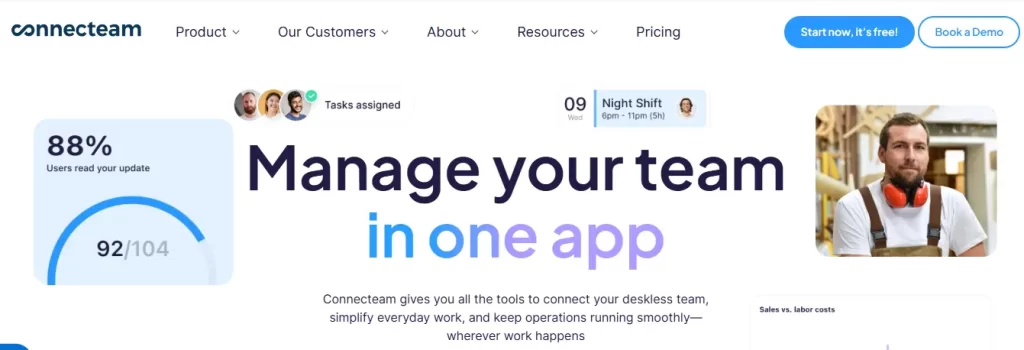
Connecteam is built for shift-based and deskless workforces retail, hospitality, healthcare combining time clocks, scheduling, and communication tools in one mobile-first app.
Best for: Businesses managing hourly staff across multiple shifts or locations.
Consider if: Your team is fully remote/desk-based Connecteam’s scheduling-heavy design is built for shift work.
Free vs. Paid Time Tracking Apps: What’s the Real Difference?
“If you just need a simple free time clock app to log hours, DeskTrack’s 15-day free trial covers clock-in/out, breaks, and basic reporting .Where free plans typically fall short is team-level features approval workflows, screenshots, integrations, and advanced reporting are almost always gated behind paid tiers. If you’re managing a growing team or need proof-of-work documentation for clients or compliance, budgeting for a paid plan is usually worth it.
Employee Time Tracking App: Key Features to Look For
Not every business needs every feature, but here’s what tends to separate a genuinely useful employee time tracking app from a basic timer:
- Automatic tracking so no one forgets to start a timer
- Idle time detection to keep reports honest
- App and website usage logs for productivity context
- Attendance and shift tracking for payroll accuracy
- Offline mode for field or travel-heavy roles
- Exportable reports for payroll, billing, or audits
- Multi-device support across desktop, web, and mobile
If oversight and productivity data matter as much as raw hours, it’s worth pairing your tracker with dedicated Productivity Monitoring Software or a full Employee Time Tracking Software suite rather than a bare-bones timer.
How to Choose the Best Time Tracking App for Your Business?
If You’re a Freelancer
Prioritize simple project/client tracking and built-in invoicing (My Hours, Harvest, DeskTrack, or Toggl Track are solid starting points).
If You Manage a Small Team
Look for shared dashboards, approval workflows, and enough free-tier headroom to grow into (Clockify and TimeCamp, DeskTrack scale well here).
If You Manage Remote or Hybrid Employees
Choose a tool with screenshots, activity levels, and attendance tracking so you get visibility without micromanaging (DeskTrack and Time Doctor are built for this).
If You Run an Enterprise Workforce
Weigh analytics depth, integrations with HR/payroll systems, and admin controls over raw simplicity (Insightful and ActivTrak, DeskTrack are designed for this scale).
Conclusion
There’s no single “best” time tracking app for everyone the right choice depends on whether you’re billing clients, managing a remote workforce, or just trying to understand your own workday better. If you’re a freelancer, start simple. If you’re managing a team especially a remote or hybrid one a tool that combines tracking with attendance and activity visibility, like DeskTrack, will save you far more admin time in the long run.
Ready to see where your team’s hours actually go? Try DeskTrack free for 15 days no credit card required and get automatic time tracking, attendance, and productivity reports set up in minutes.
Frequently Asked Questions (FAQ)
Ans. Clockify is generally considered the best free time tracking app because its free tier supports unlimited users and unlimited time tracking, which most competitors restrict. My Hours and Toggl Track are also strong free options for freelancers and small teams. Ans. For remote and hybrid teams, tools like DeskTrack and Time Doctor are best suited since they combine time tracking with activity monitoring, screenshots, and attendance giving managers visibility without requiring employees to self-report. Ans. Many modern time tracking apps, including DeskTrack, support offline tracking. The app keeps logging activity locally and automatically syncs the data once the device reconnects to the internet. Ans. Yes, in most countries employee monitoring is legal as long as employers are transparent about what’s being tracked, obtain necessary consent, and avoid collecting personal or non-work-related data. Always check local labor laws before rolling out monitoring software. Ans. Pricing varies widely by tool and feature set most paid plans are billed per user per month, with basic tiers aimed at small teams and higher tiers unlocking monitoring, analytics, or enterprise admin controls. Free plans are common but usually cap users or features. Ans. Yes, By logging exact clock-in/out times and hours worked, time tracking apps remove manual guesswork from payroll and make it easier to calculate overtime, breaks, and billable hours accurately many even integrate directly with payroll software.time-tracking-apps