Your team isn’t lazy. Your tools are.
If deadlines keep slipping despite everyone “working hard,” the problem usually isn’t people — it’s the patchwork of spreadsheets, chat threads, and disconnected apps your team is forced to stitch together every day. That’s where a solid work management software changes everything: one platform to plan, assign, track, and actually finish work, instead of just talking about it.
We’ve tested and compared the top 10 best work management software for 2026 so you don’t have to. Inside, you’ll find what to look for, where most tools fall short, and why DeskTrack keeps coming out on top for teams that want real visibility not just another login.
| Software | Rating | Starting Price | Best For | Top Pro | Main Con |
|---|---|---|---|---|---|
| DeskTrack | ⭐ 4.8/5 | $5.99/user/mo | Teams wanting one platform to replace five tools | Real-time monitoring, automated time tracking, deep reporting | Onboarding curve for power features |
| Asana | ⭐ 4.5/5 | $10.99/user/mo | Large enterprise teams | Robust project views, wide integrations | No built-in time tracking |
| Monday.com | ⭐ 4.6/5 | $9/user/mo | Marketing, ops & creative teams | Highly visual, flexible templates | Costly for full features |
| ClickUp | ⭐ 4.5/5 | Free plan available | Technical teams wanting customization | Feature-rich, generous free tier | Steep learning curve |
| Paymo | ⭐ 4.7/5 | Free plan available | Freelancers & agencies | Built-in invoicing, clean interface | Limited integrations |
| Notion | ⭐ 4.4/5 | Free plan available | Documentation-driven teams | Highly flexible, beautiful UI | No native time tracking |
| Toggl Plan | ⭐ 4.6/5 | $8/user/mo | Small teams, simple project needs | Intuitive timeline view | Not suited for complex workflows |
| Teamwork | ⭐ 4.5/5 | Free plan available | Client-facing project teams | Client portal, milestone tracking | Time tracking needs improvement |
| Wrike | ⭐ 4.3/5 | Free plan available | Cross-departmental collaboration | Powerful reporting, scalable | Expensive, complex for small teams |
| Smartsheet | ⭐ 4.4/5 | $9/user/mo | Data-driven project tracking | Familiar spreadsheet interface | Limited monitoring capabilities |
What is Work Management Software?
A work management system unifies daily task assignment, automated time tracking, and team collaboration into a single dashboard. A robust platform typically includes task management, time tracking, reporting, team collaboration, and workflow automation tools that replace scattered spreadsheets, email chains, and siloed apps.
The key distinction: while project management software focuses on structured, time-bound projects, a work management solution covers the full spectrum recurring tasks, approvals, resource planning, attendance, and more. Think of it as command central for everything your team does.
Why do remote and hybrid teams struggle without a centralized software?
Here’s a scenario that plays out in thousands of businesses every week:
Your team is talented. Everyone’s working hard. But somehow deadlines still slip, managers have no real visibility into what’s happening, and half the week disappears into status meetings and “quick check-ins.” Sound familiar?
The problem isn’t effort it’s infrastructure. Without a solid centralized system, teams lose time to:
- Unclear task ownership — “I thought you were handling that.”
- Manual status updates — Chasing people instead of tracking progress automatically.
- Scattered communication — Critical decisions buried in email or chat threads.
- No accountability layer — No way to know who’s working on what, and for how long.
- Inefficient billing — Hours worked go untracked, and invoices get delayed.
A unified work management tool solves all of this and pays for itself fast.
Stat to know: Research from McKinsey & Company shows that employees spend nearly 20% of their workweek just looking for information or chasing status updates time that’s completely recoverable with the right systems.
What features make a work management tool truly effective?
Not all work management tools are built the same. When evaluating your options, here’s what a best-in-class work management solution should offer:
1. Task & Subtask Management
The ability to break any project into granular tasks, subtasks, and checklists with owners, due dates, priorities, and status tracking for each. No more “who’s doing what?” confusion.
2. Automated Time Tracking
Manual timesheets are a lie. The best tools track time automatically, logging app usage, active vs. idle time, and billable hours without interrupting your team’s flow. For a deeper look, check out DeskTrack’s Project Time Tracking Software capabilities.
3. Employee & Activity Monitoring
Modern teams need visibility especially with remote and hybrid setups. An integrated Employee Monitoring Software module gives managers real-time clarity on productivity without micromanaging.
4. Real-Time Reporting & Dashboards
Actionable reports not data dumps. Your work management system should surface insights that help you make faster, smarter decisions about resourcing, timelines, and performance.
5. Workflow Automation
Repetitive tasks kill momentum. Smart automation (auto-assigning tasks, sending reminders, triggering approvals) removes friction so your team stays focused on high-value work.
6. Leave & Attendance Management
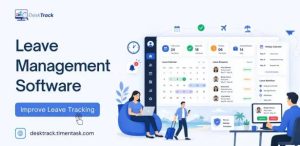
Integrated Leave Management Software ensures you always know who’s in, who’s out, and how to plan around absences without a separate HR tool.
7. Collaboration & Communication
Built-in message boards, comments on tasks, and file sharing keep conversations tied to the work not scattered across Slack, email, and WhatsApp.
8. Integrations & Compatibility
Your work management platform should play nicely with your existing stack calendars, payroll, HR tools, and more.
“Want to see how automated tracking compares to manual boards?
Try DeskTrack’s Free Trial,trusted by 100K+ users.
Top 10 Best Work Management Software in 2026
Here’s an honest, side-by-side look at the leading work management softwares on the market today.
1. DeskTrack
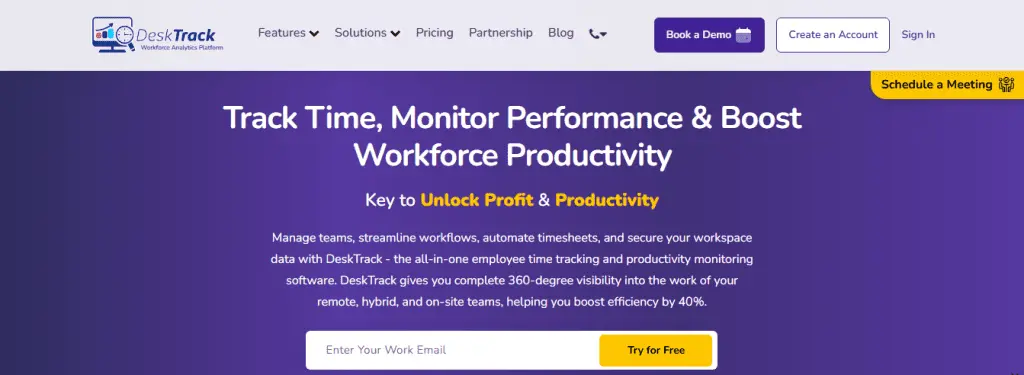
Rating: ⭐ 5/5 | Starting at $5.99/user/month
DeskTrack isn’t just a task manager it’s a complete work management system built for the realities of modern teams. Whether you’re managing an in-office squad, a fully remote workforce, or anything in between, DeskTrack gives you everything in one intelligent platform.
What makes DeskTrack stand out from every other tool on this list is the combination of depth and simplicity. You get enterprise-grade features automated time tracking, real-time monitoring, project management, payroll integration, and more wrapped in an interface that your team will actually use.
Why Teams Love DeskTrack:
- Automatic time tracking with zero manual input every second is logged accurately.
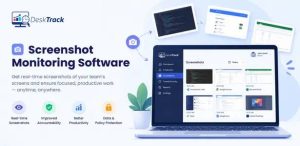
- Full-suite Computer Monitoring Software with screenshot capture, app/URL tracking, and idle time detection.
- Powerful project and task management with subtasks, checklists, dependencies, and Kanban boards.
- Built-in Time Tracking Software with billable hours reporting and client invoicing.
- Comprehensive Best HR Software for Business features including attendance, timesheets, and leave management.
- Trusted by 100,000+ users across 8,000+ businesses in 100+ countries.
| Best for | Pros | Cons |
|---|---|---|
| Teams that want one platform to replace five tools. | Highly customizable, Real-time monitoring, Deep reporting, Easy setup | Onboarding curve for power features, Offline mode could be enhanced |
This ensures a balance between accountability and privacy.
2. Asana
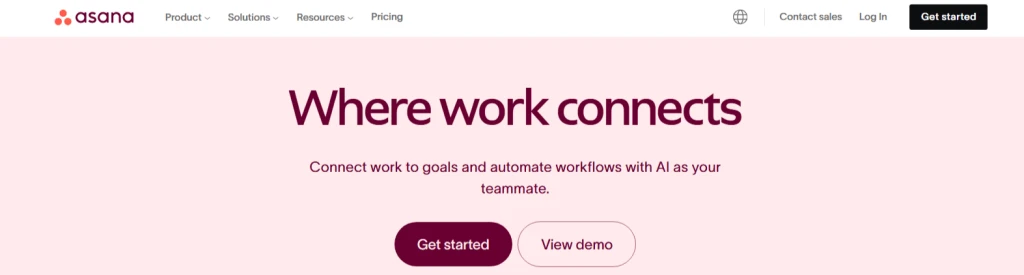
Rating: ⭐ 4.5/5 | Starting at $10.99/user/month
Asana is a well-established work management platform with a strong feature set for enterprise workflows. It excels at task dependencies, project timelines, and team collaboration at scale. However, it lacks native time tracking and monitoring depth, which often means pairing it with another tool adding cost and complexity.
| Best for | Pros | Cons |
|---|---|---|
| Large organizations with complex, cross-functional projects | Robust project views, Automation rules, Wide integrations | No built-in time tracking, Gets expensive at scale |
3. Monday.com
Rating: ⭐ 4.6/5 | Starting at $9/user/month
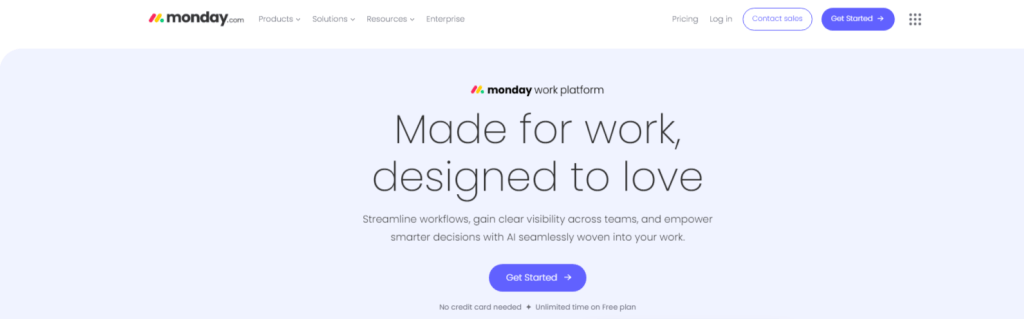
Monday.com is beloved for its colorful, highly visual boards and flexible no-code workflow builder. It’s a strong work management tool for teams that are very process-driven. That said, it can become overwhelming quickly, and the pricing adds up fast as you add features.
| Best for | Pros | Cons |
|---|---|---|
| Marketing, operations, and creative teams | Highly visual, Flexible templates, Easy onboarding | Costly for full feature access, Limited native monitoring |
4. ClickUp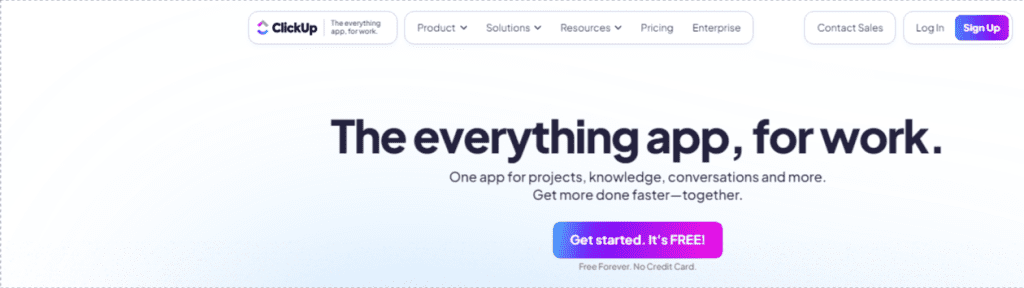
Rating: ⭐ 4.5/5 | Free plan available
ClickUp promises to replace all your apps and to be fair, it comes close. This work management software is incredibly feature-rich, with dozens of views, automation, and reporting options. The catch? That power comes with a significant learning curve that can slow down adoption.
| Best for | Pros | Cons |
|---|---|---|
| Technical teams and power users who want deep customization | Extremely feature-rich, Generous free tier, Multiple views | Steep learning curve, Can feel cluttered |
5. Paymo
Rating: ⭐ 4.7/5 | Free plan available
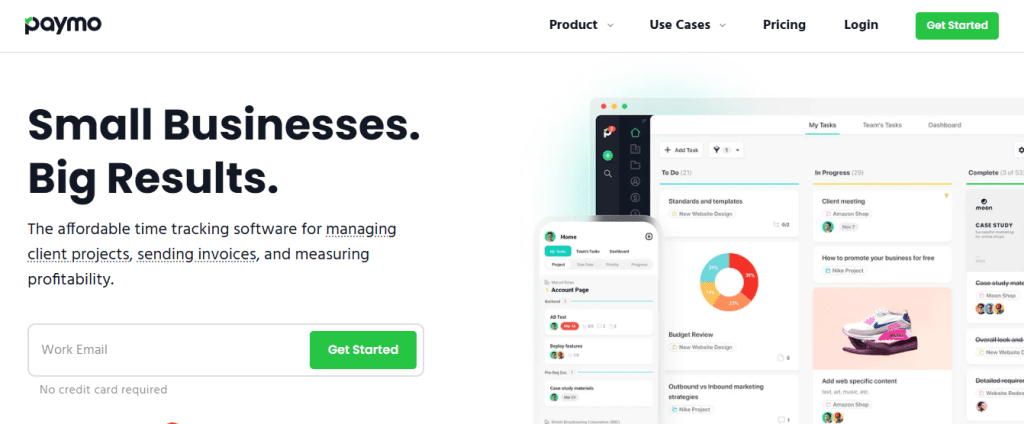
Paymo is an excellent work management solution for service-based businesses and agencies. It combines task management, time tracking, and client invoicing in one clean package. The main limitation is its integration ecosystem, which is more limited compared to the bigger players.
| Best For | Pros | Cons |
|---|---|---|
| Agencies, consultants, and freelancers billing by the hour | Built-in invoicing, Clean interface, Solid time tracking | Limited third-party integrations, Advanced features locked in paid plans |
6. Notion
Rating: ⭐ 4.4/5 | Free plan available
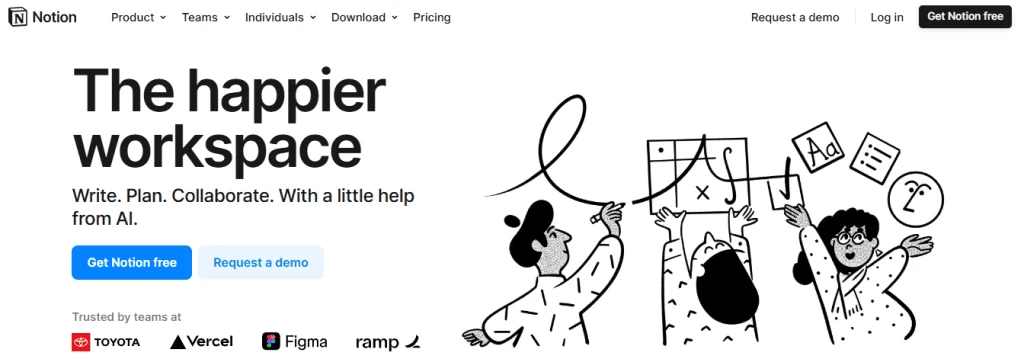
Notion is the Swiss army knife of work management tools for teams that live and breathe documentation. It’s part wiki, part database, part project tracker. But while it’s enormously flexible, it requires significant setup and it lacks robust time tracking and monitoring capabilities out of the box.
| Best for | Pros | Cons |
|---|---|---|
| Knowledge workers, content teams, and startups building internal wikis | Highly flexible, Great for documentation, Beautiful interface | No native time tracking, Setup-heavy for new teams |
7. Toggl Plan
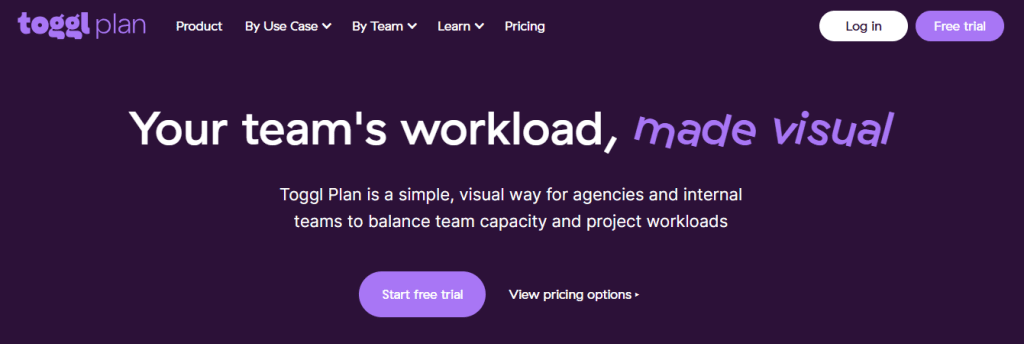
Rating: ⭐ 4.6/5 | Starting at $8/user/month
If your team primarily thinks in timelines rather than boards or lists, Toggl Plan offers a refreshingly clean approach to work management. It’s ideal for teams managing multiple projects simultaneously and needing a quick visual overview. However, it’s not suited for complex, multi-phase projects with deep dependencies.
| Best for | Pros | Cons |
|---|---|---|
| Small teams with straightforward project needs | Intuitive timeline view, Easy for first-time users, Clean UI | Limited depth, Not suitable for complex workflows |
8. Teamwork
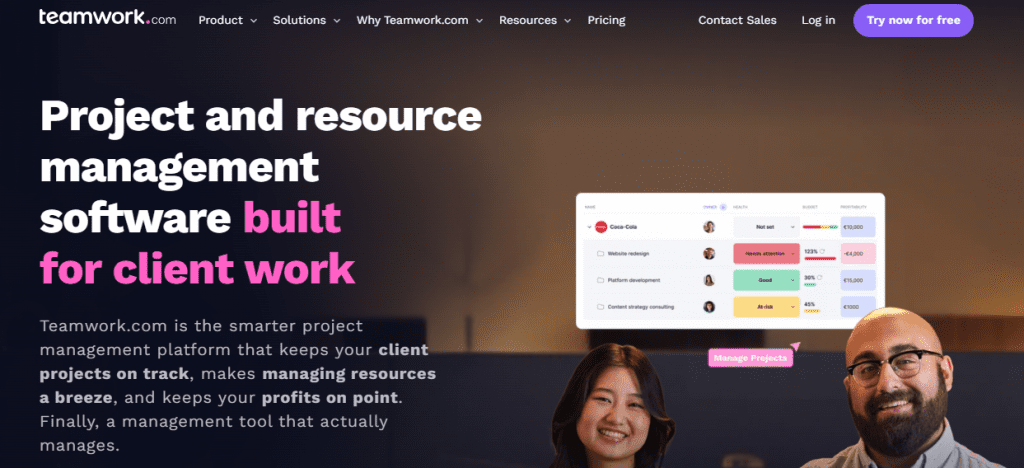
Rating: ⭐ 4.5/5 | Free plan available
Teamwork is a solid work management platform designed specifically for client-facing teams. It includes milestone tracking, customizable dashboards, and solid reporting. The time-tracking module, however, has been flagged as needing improvement in user reviews.
| Best for | Pros | Cons |
|---|---|---|
| Agencies and consultancies managing client deliverables | Client portal, Milestone tracking, Automation templates | Time tracking needs improvement, UI can feel dated |
9. Wrike
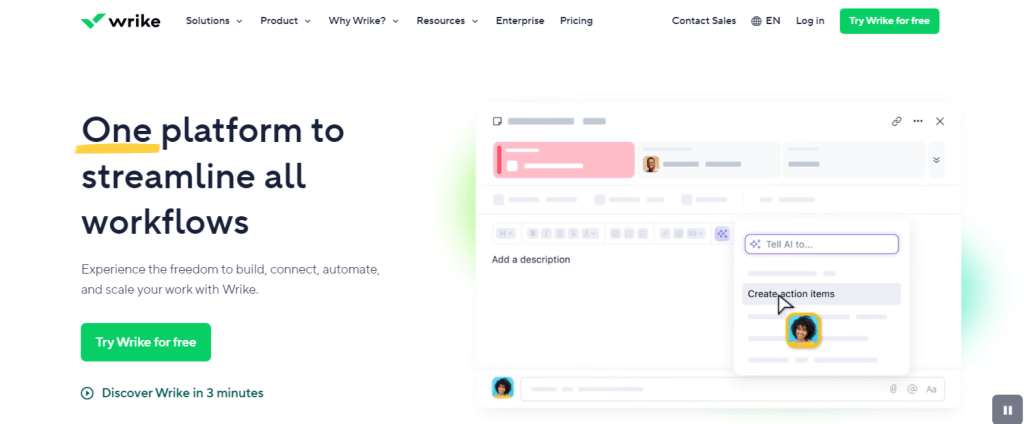
Rating: ⭐ 4.3/5 | Free plan available
Wrike is a mature work management system with strong cross-functional collaboration features. It’s used by large enterprises to manage complex departmental workflows. However, it’s one of the more expensive options on this list, and the interface can feel overwhelming for smaller teams.
| Best for | Pros | Cons |
|---|---|---|
| Mid-to-large enterprises with multiple departments to coordinate | Powerful reporting, Strong security, Scalable | Expensive, Complex for small teams |
10. Smartsheet
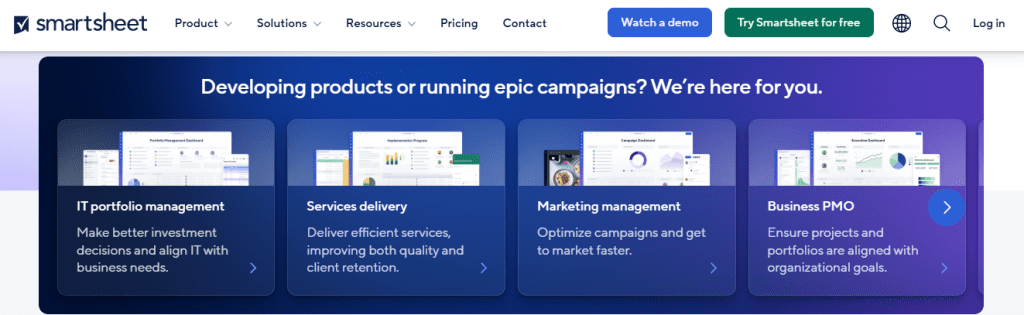
Rating: ⭐ 4.4/5 | Starting at $9/user/month
Smartsheet takes a spreadsheet-first approach to work management, which makes it a natural fit for Excel-heavy teams making the transition to collaborative software. It’s powerful for structured, data-intensive workflows but can feel rigid for teams that prefer more dynamic, visual project views.
| Best For | Pros | Cons |
|---|---|---|
| Finance, operations, and data-heavy project teams | Familiar spreadsheet interface | Powerful automation | Solid reporting | Less intuitive for visual thinkers | Limited monitoring capabilities |
How to Choose the Right Work Management Platform for Your Team
With so many options, choosing the right work management software can feel paralyzing. Here’s a smart framework to cut through the noise:
1. Start with your biggest pain point. Is it task visibility? Time tracking accuracy? Team accountability? Lead with the problem, not the feature list.
2. Audit your current tools. List every app your team uses today. The best work management solution should consolidate, not add to, that stack.
3. Prioritize your team type. Remote teams need stronger monitoring. Agencies need billing integration. Enterprises need scalability and security.
4. Insist on a free trial. Never buy a work management platform without putting it in front of real users first. Adoption is everything.
5. Calculate true ROI. If your team of 20 wastes just 5 hours per week on status updates and manual tracking, that’s 100 hours/week lost. The right work management tool pays for itself in the first month.
For a deeper look at managing your workforce effectively, explore DeskTrack’s Employee Monitoring Software to see how monitoring and management work together.
How DeskTrack Helps Teams Fill the Gaps Left by Other Tools
Every tool on this list has something to offer. But here’s the honest truth: most of them are built for one slice of the problem. DeskTrack is built for the whole picture.
The Problem Most Teams Face
Managers have visibility gaps. Employees have unclear priorities. Productivity leaks happen silently through idle time, untracked work, misallocated resources, and disorganized task queues. Most work management systems show you the plan. DeskTrack shows you what’s actually happening.
The DeskTrack Difference
Real-Time Visibility: Know exactly what every team member is working on right now. Not yesterday’s update in a status meeting. Live, accurate data that drives better decisions.
Automated Everything: Time tracking, attendance, timesheets, invoicing all automated. Your team focuses on work; DeskTrack handles the admin.
One Platform, No Gaps: From project kick-off to client invoice, DeskTrack connects every part of your workflow. That means no integration headaches, no data silos, and no extra tool to manage.
Smart Productivity Insights: DeskTrack doesn’t just track it analyzes. Identify your highest-performing employees, spot workflow bottlenecks, and make resource decisions backed by real data. Pair it with DeskTrack’s Time Tracking Software for complete visibility.
Built for Every Work Model: In-office, remote, hybrid, field teams DeskTrack adapts to how your team works, not the other way around.
According to Forbes, the best project management platforms are those that combine ease of use with deep analytical capability exactly the balance DeskTrack delivers.
Proven Results
- Used in 100+ countries
- Trusted by 100,000+ active users
- Deployed across 8,000+ businesses
- Rated 4.8/5 on G2 | 4.9/5 on Google
Conclusion
There’s no shortage of work management tools on the market. The real differentiator isn’t the feature list it’s whether your team adopts it, uses it daily, and gets genuine value from it.
The best workforce analytics software in 2026 needs to be powerful enough to give leaders full visibility, simple enough that frontline employees embrace it, and flexible enough to fit your specific way of working.
DeskTrack checks every one of those boxes and then some. With real-time monitoring, automated tracking, and a genuinely complete work management system built for modern teams, it’s not just the top-rated option on this list. It’s the one that consistently delivers results.
This ensures a balance between accountability and privacy.
Frequently Asked Questions (FAQs)
Ans. Work management software covers all work — both project-based and day-to-day tasks like attendance, time tracking, and operations. Project management software focuses only on defined projects with start and end dates. A work management system is broader, more flexible, and handles the full scope of what your team does. Ans. DeskTrack is widely considered the best work management solution for small and growing businesses. It combines time tracking, employee monitoring, task management, and HR features in one affordable platform — starting at just $5.99/user/month — with no need for multiple tools. Ans. A good work management tool eliminates the hidden productivity killers: unclear task ownership, manual status updates, and poor visibility. By automating tracking, centralizing communication, and surfacing real-time data, teams typically recover 15–20% of their working hours that were previously lost to administrative overhead. Ans. Absolutely. In fact, remote teams benefit the most from a strong work management platform. Features like automated time tracking, activity monitoring, and real-time dashboards give managers full visibility without requiring constant check-ins — keeping distributed teams aligned and accountable from anywhere. Ans. The most important features include task and subtask management, automated time tracking, real-time reporting, employee monitoring, workflow automation, leave management, and integrations with your existing tools. DeskTrack offers all of these in a single, unified work management system — making it the smartest choice for most teams.work-management-software