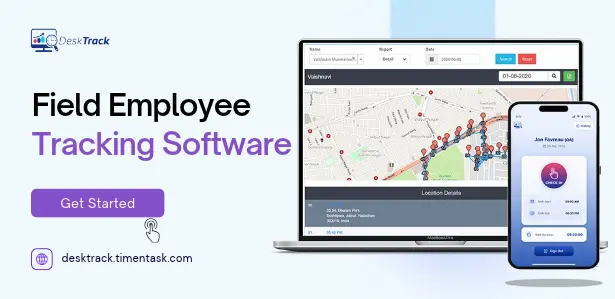
Field employee tracking software is a mobile app plus a manager dashboard. It records where field staff check in, which visits they complete and how long jobs take. Teams use it for attendance proof, visit verification, task updates and quicker reporting. Features and pricing differ by provider, so confirm current details before buying. You can start with a 15-day free plan, no credit card required.
A sales manager calls a representative at 2 p.m. and hears, “Almost there, sir.” The accounts team is still waiting for last week’s handwritten visit sheets, and nobody can say with confidence how many clients were actually visited. If that sounds familiar, field employee tracking software is built for you. It shows where your mobile staff are working, what they have finished and when, without a dozen follow-up calls.
This guide is written for owners and managers, not for people who already speak vendor jargon. You will find plain explanations, honest limits, a buying checklist, and a straight look at the pricing questions Indian businesses ask most.
What Is Field Employee Tracking Software?
Field employee tracking software helps a business see and manage employees who work away from the office: sales representatives, technicians, delivery staff, inspectors, cleaners and site supervisors. Employees use a phone app to check in, log visits and update jobs. Managers watch the results on a web dashboard.
You will see several names for similar tools, and they are not perfect synonyms:
- Field tracking software is the broad, everyday term. It usually covers check-ins, location and visit records.
- An employee location tracking app focuses on where a phone is. It answers “where” but not always “what was done.”
- Field staff tracking software often points to teams that visit many places, such as promoters, merchandisers and collection agents.
- Field employee monitoring software leans toward oversight: activity logs, location trails and alerts. How much it watches is a policy choice, covered below.
- Field employee management software is wider still. It adds scheduling, task assignment, forms, approvals and reports.
- Field service management software goes deeper into work orders, dispatch, parts and invoices, which suits repair and installation businesses.
These categories overlap, and no two products have identical features. Judge a tool by what it does for your day, not by its label.
How Does Field Employee Tracking Software Work?
A manager first sets up employees, teams, working hours and the rules for what data is collected. Each employee installs the app and allows permissions such as location, notifications and, where needed, camera access.
During the day, the employee checks in, which stamps the time and place. Depending on settings, the app may send location updates at intervals, log a visit when someone reaches a client site, or capture location only at check-in and check-out. Task updates, photos and notes flow into the dashboard, where managers read attendance, job status and reports.
What you actually get depends on several things:
- The provider’s design. Some apps track continuously during shifts; others record points only at set events.
- Phone permissions. If location access is limited, records will have gaps.
- Battery and operating system settings. Power-saving modes can pause background activity on some phones.
- Network coverage. Weak signal delays updates, although some apps save data and sync later.
- Your configuration. Update frequency and geofence size change what you see.
Not every app tracks location continuously, and continuous tracking is not always the right choice. Many teams find that location at check-in, at visits and at job completion gives enough proof with far less data and less friction.
What Features Should a Field Employee Tracking App Have?
A good field employee tracking app is judged by how well its features fit your workflow, not by the length of its feature list. These are the ones worth understanding.
GPS location and location history
GPS shows where an employee is, live or as a recorded trail. Dispatchers use it to find the nearest technician, and managers use it to confirm where a visit happened. Accuracy can drift indoors or in dense areas, and a location only proves where a phone was, not how well the work was done.
Geofencing and location-based attendance
A geofence is a virtual boundary around a site such as an office, warehouse or construction yard. Check-in can be accepted only inside it, which suits facility and construction teams. If the boundary is too tight, honest check-ins get rejected, so test fence sizes at real sites.
Check-in and check-out
For small teams this is the foundation. A time-stamped, location-linked check-in replaces paper registers and “reached” messages on WhatsApp. It shows presence, not productive work, so pair it with visit or task records.
Task assignment and job status
Managers assign visits or jobs, and staff mark them accepted, in progress or done. That removes many status calls. It only works if updating takes a few taps; otherwise employees batch updates at day’s end and the data loses value.
Route planning
Route tools suggest an order of visits to cut travel time, which matters for sales and delivery teams with many stops. Quality varies, from simple map pins to routes that consider time windows. Ask how routes are calculated.
Visit verification and proof of service
Time, location, photos, notes and customer signatures confirm that a visit happened and what was done. A technician can close a job with before-and-after photos instead of phoning the office. Check how forms behave offline and whether photos upload reliably.
Timesheets and working-hour reports
Automated timesheets compile hours from check-ins and jobs, so administrators stop retyping paper logs. They are only as accurate as the entries behind them, so confirm the tool handles your shift, break and overtime rules.
Dashboards and alerts
Dashboards summarize attendance, active jobs and exceptions such as late starts or missed visits. Alerts help you act during the day, but too many become noise. Look for adjustable thresholds and role-based views.
Integrations
Connections to payroll, CRM and HR tools reduce double entry. Ask whether they are built in, need an API, or cost extra.
Security, permissions and audit trails
Role-based access controls who can see employee data, and audit trails record who changed what. Ask about encryption, login options and how access is removed when someone leaves.
What Are the Benefits of Field Staff Tracking Software?
Benefits depend on how well the tool fits your work and how consistently people use it. When it fits, businesses commonly gain:
- Clearer visibility. Managers see status and location in one place instead of piecing it together from calls and chats.
- Cleaner attendance records. Time-stamped, location-linked check-ins reduce disputes and manual corrections.
- Less reporting effort. When staff log work on the phone, administrators stop collecting and retyping reports.
- Better coordination. Dispatchers can assign jobs by availability and proximity rather than guesswork.
- Smarter scheduling. Past visit durations and travel gaps show where plans were unrealistic.
- Faster problem spotting. Delays surface during the day, not a week later.
None of this is automatic. Software records and surfaces information; improvement comes from managers acting on it and from employees finding the app easier than the old way.
Who Needs Field Employee Management Software?
Requirements differ by industry, so match the tool to the work.
Sales teams: the sales employee tracking app
A sales employee tracking app helps managers see planned versus completed visits, time spent per client and follow-up notes. Priorities are visit check-ins, route planning and CRM links. It can confirm that a representative covered the beat, but conversation quality still needs a manager’s attention. A field staff tracking app is a good fit for promoters and merchandisers too.
Service technicians
Technicians need job details, customer addresses, checklists and proof of completion. Scheduling, dispatch and offline forms matter, because basements and plant rooms rarely have good signal.
Facility management
Cleaning, security and maintenance crews work at fixed sites on shifts. Geofenced attendance, rosters and inspection checklists are the usual needs, along with reports clients can review.
Delivery and logistics
Drivers and riders benefit from route planning, delivery status and proof of delivery. Live location often matters more here, so test battery use and update frequency carefully.
Construction and maintenance
Crews move between sites, and supervisors need to know who is where, plus safety checks and daily progress photos.
Small businesses
A ten-person team may need only attendance, basic location proof and a simple report. A larger operation may need task workflows, approvals, integrations and tighter access controls. Start with the minimum you need, as long as the tool can grow with you.
What Is DeskTrack and What Can It Do?
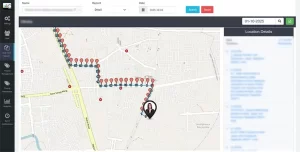
DeskTrack is field employee tracking software with a mobile app for your team and a web dashboard for managers. It is built to help businesses replace handwritten visit sheets and “almost there” phone calls with time-stamped, location-linked records.
Here is what DeskTrack offers:
- Check-in and check-out with location: Staff mark attendance from the app, and each entry carries a time and place.
- Visit and task updates: Employees log visits, add notes and update job status from their phone.
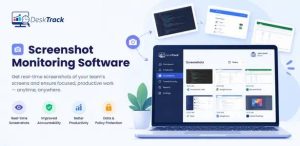
- Manager dashboard and reports: See attendance, completed visits and working hours in one place, without chasing reports.
DeskTrack suits sales teams, service technicians, facility crews and other mobile staff who need visit proof and quicker reporting. As with any tool, check which features are included in each plan.
Can You Try Field Employee Tracking Software Before Paying?
Yes. You can start with a 15-day free plan, and no credit card is required. That gives a small team enough time to run real check-ins, visits and reports before spending anything.
Here is how to use the 15 days well:
- Pick three to five employees, including at least one skeptic.
- Test attendance and location check-ins on real routes, not in the office.
- Try visit or task updates, then open the reports they produce.
- Note battery use, signal gaps and how long daily updates take.
- Ask the team what felt slow or confusing.
Before the trial ends, confirm which features and user limits apply to the paid plan, how reports can be exported, and what the privacy and data retention terms are. Decide on evidence from your own team, not from a demo alone.
How Much Does a Field Employee Tracking App Cost in India?
If you are searching for a field employee tracking app India businesses can afford, expect pricing to vary by provider and plan. Many vendors charge per user per month, and some bundle features into tiers. Setup fees, add-ons for route planning or integrations, and minimum user counts can change the real cost.
I have deliberately not listed prices, because they change and invented figures would mislead you. Ask each vendor for a written quote in rupees, confirm whether GST is included, and ask what the total yearly cost looks like for your headcount.
How Do You Choose the Best Field Employee Tracking Software?
The best tool is the one that fits your team’s work, budget and policies. Ranked lists are often promotional, so compare vendors on the same checklist and test them with real work. This table works for any field staff tracking software you are considering.
| Evaluation criteria | Questions to ask | Why it matters |
| Team size and needs | Is it built for teams like ours? What are the minimum and maximum users? | A tool built for large enterprises may overwhelm a small team; the reverse may cap growth. |
| Location accuracy | How is location captured? Can update frequency be set? | It affects trust in the data, battery use and privacy exposure. |
| App usability | Can staff finish core tasks in a few taps? Which phones are supported? | If people avoid the app, the data is unreliable. |
| Offline use | What works without signal? How does syncing work? | Field work often happens in weak coverage. |
| Attendance and reports | Can we export and customize reports? Does it fit our shift and overtime rules? | Reports must match how you pay and bill. |
| Tasks and routes | Can we assign, reassign and track jobs? How are routes calculated? | This decides whether it supports daily work or only records it. |
| Integrations | Which payroll, CRM and HR tools connect? Is API access included? | Poor integration means double entry and errors. |
| Security and privacy | How is data encrypted, who can see it, how long is it kept? | Location data is sensitive and carries legal and trust risk. |
| Support and scale | What support hours and languages are offered? Can we add sites and roles? | Growth and troubleshooting should not force a platform change. |
| Pricing | Is it per user per month? Any setup fees, add-ons or minimums? | The headline price may not be the total cost. |
Shortlist three or four vendors, ask for demos built around your own scenarios, and run a pilot with a small group before committing. Confirm current features and pricing directly with each vendor.
Is Employee Tracking Legal and Fair? Privacy and Responsible Monitoring
There is a real difference between operational visibility and surveillance. Knowing a technician reached a customer site is operational. Following someone’s location after work hours, or collecting more than you need, is where trust and legal risk begin. Field employee monitoring software should be set up around a clear business purpose.
Good practice generally includes:
- Clear notice. Tell employees what is collected, when, why and who can see it, preferably in writing.
- Defined purposes. Use location for attendance, dispatch, safety and service proof, not unrelated purposes.
- Working-hour limits. Track during work hours only, and let staff pause tracking outside them.
- Minimum data. If check-in location is enough, continuous trails may not be needed.
- Restricted access. Not everyone in the company needs to see employee movements.
- Retention and deletion. Set how long location data is kept and delete it afterward.
- Secure storage. Ask vendors about encryption and access controls.
In India, the Digital Personal Data Protection Act, 2023 governs how personal data, including location data, is handled. Rules and timelines are still developing, and requirements around notice and consent can apply to employers. Check the current position with a qualified lawyer rather than assuming any method is lawful everywhere.
Finally, location is not a measure of productivity or quality. A technician who stays longer at a site may be solving a hard problem. Use tracking data to start conversations, alongside outcomes like completed work and customer feedback.
What Problems Come Up When You Roll It Out?
The technology is usually the easy part. The harder issues are human:
- Adoption. Staff may worry about surveillance or find the app clumsy.
- Permissions and battery. Settings vary by phone, and background tracking can drain older devices.
- Connectivity. Weak signal creates gaps and delays.
- Inaccurate data. GPS drift and forgotten check-outs happen.
- Over-reliance on metrics. Numbers can hide context.
A transparent rollout prevents most of these:
- Name the operational problem you want to solve.
- Pick the minimum features that address it.
- Explain the tracking policy to employees in plain language.
- Pilot with a small team that includes a few skeptics.
- Train employees and managers, including how data will be read.
- Measure outcomes such as reporting time, missed visits and timesheet corrections.
- Fix friction found in the pilot before expanding.
Is Field Employee Tracking Software Worth the Cost?
Worth depends on what the software replaces. Weigh administrative hours spent collecting reports, attendance accuracy, scheduling quality, subscription and setup fees, training time, and whether employees will actually use it. A tool nobody adopts has a cost and no benefit.
Here is a hypothetical example, not a customer result. Suppose a company with 20 field employees spends 10 admin hours a week compiling attendance and visit reports, and that time costs 300 rupees an hour. That is 3,000 rupees a week. If the tool cut that effort in half, the saving would be 1,500 rupees a week, to compare against the subscription, setup and training costs. Replace these assumptions with your own numbers, and add benefits that are harder to price, such as fewer payroll disputes.
Conclusion
Choosing field employee tracking software is less about the longest feature list and more about matching a tool to how your team really works. Start with the problem you need to solve, whether that is attendance proof, reporting, dispatch or visit records, and pick the minimum features that address it. Favour an app your employees will actually use, because adoption decides data quality. Treat security and employee trust as requirements, and think about how the tool will scale as you grow. When you are ready, shortlist a few providers, start with a 15-day free plan, no credit card required, and test them on your real field scenarios before deciding.
Ready to test it on your own team? Start your 15-day free DeskTrack plan, no credit card required.
Frequently Asked Questions
Q. What is field employee tracking software?
Ans. Field employee tracking software is a mobile and web-based system that records where off-site employees work and what they do. It combines check-ins, location data, task updates and reports so managers can verify attendance and coordinate work without relying on calls and spreadsheets.
Q. What is the difference between a tracking app and workforce management software?
Ans. A tracking app focuses on location, attendance and visit proof. Workforce management software is broader, covering scheduling, task workflows, approvals and analytics. Some products combine both, so compare actual features rather than labels, and decide whether you need simple visibility or full operational control.
Q. Is a field staff tracking app suitable for small businesses?
Ans. Often, yes. Small teams can use attendance, location check-ins and simple reports without complex setup. Choose a tool that matches current needs, is easy for staff and can scale. Pilot it with a small group first and watch for user limits and upgrade costs.
Q. What is employee monitoring software used for?
Ans. It is used to oversee field activity: attendance, location history, job status, visit compliance and safety alerts. Used responsibly, it supports coordination and accountability. Used excessively, it harms trust, so define clear purposes, inform employees and collect only the data you need.
Q. Can I try field employee tracking software before paying?
Ans. Yes. You can start with a 15-day free plan, and no credit card is required. Use it to test check-ins, visit records and reports with a small team before you decide. Confirm plan limits, such as users and features, before the trial starts.
Q. Can field tracking apps show GPS location in real time?
Ans. Many can, but it depends on the product, plan and settings. Some apps update location at intervals; others record it only at check-in or visit events. Accuracy also depends on phone permissions, battery settings and network coverage. Confirm update frequency and whether live tracking is included in your plan.
Q. Can employee tracking work without internet?
Ans. Some apps store check-ins, forms and notes on the phone and sync when signal returns; others need a live connection. GPS itself can work without data, but uploads and map views usually cannot. Ask vendors which functions work offline and how syncing conflicts are handled.
Q. How much does field staff tracking software cost?
Ans. Pricing varies widely. Many vendors charge per user per month, and some add setup fees or charge extra for route planning and integrations. Because prices change, request current written quotes in rupees, confirm GST and minimum user counts, and ask what each tier includes.