Your team delivered on time, so why did the project lose money? The answer is usually in the hours nobody logged: extra meetings, scope creep, rework no one billed.
Project time tracking software fixes this by tying every hour to a project, task and client. You see where time goes while there’s still time to act.
This guide compares eight tools for 2026, including our own, DeskTrack. You’ll get a quick-pick table, honest pros and cons, current pricing and a simple way to choose by team size.
Read Also – Best Toggl Alternatives in 2026 for Project Time Tracking
Quick-Pick Summary: Best Project Time Tracking Software
| Tool | Best for | Key feature | Starting price |
|---|---|---|---|
| DeskTrack | Agencies wanting automatic timesheets | Automatic tracking + timesheet approvals | From $1.99/user/mo |
| Hubstaff | Remote agencies | Project budgets + payroll | $4.99/seat/mo |
| Toggl Track | Simple, low-friction tracking | Easy timers + profitability reports | $9/user/mo |
| Harvest | Client billing | Time + invoicing + expenses | $9/seat/mo |
| ClickUp | Tasks and time in one place | Native tracking inside tasks | $7/user/mo |
| monday.com | Visual workflows | Time tracking column (Pro) | $9/seat/mo |
| Jira | Software teams | Issue-level work logs | $8.58/user/mo |
| Zoho Projects | Budget-conscious teams | Built-in timesheets + billing | $2.95/user/mo |
What Is Project Time Tracking Software?
Project time tracking software records how long people spend on each project, task and client. It turns those hours into timesheets, budget reports and invoices. Some tools use manual timers. Others capture time automatically from computer activity. Managers use the data to control costs and bill accurately.
Why Time Tracking in Project Management Matters in 2026
Estimates are guesses until you compare them with logged hours. Time tracking project management shows which clients and task types eat your margin, so you can fix pricing before the next quote goes out.
Unlogged work is also unbilled work. Timesheets tied to billable rates stop revenue from leaking. Hours per person show who is overloaded and who has room, which helps you balance team workload before deadlines slip. For remote and hybrid teams, tracked time gives a shared, objective record of effort across time zones.
Trends Shaping the Category
Four changes stand out in 2026:
- Automatic time capture: tools record app and project activity, so people forget less.
- AI timesheet suggestions: software drafts entries from calendar and activity data, and people review them instead of typing.
- Privacy and transparency: employees accept tracking when they know what is collected and why.
- Deeper integrations: a tracker that connects with Jira, Asana, Slack and ClickUp gets used, because it fits the stack your team already has.
Key Features to Look For in Project Management Time Tracking Software
Before you compare vendors, check that the tool covers these basics:
- Timers, manual entry and project, task and client tagging
- Billable rates, timesheets and approvals
- Project budgeting with overrun alerts
- Productivity analytics and client reporting
- Integrations with your PM tool, chat and accounting stack
- Privacy controls and a visible tracking option
A mobile app helps field and hybrid staff. Also read the pricing page closely for seat minimums and add-ons, since these change the real cost.
8 Best Project Time Tracking Software Tools in 2026
We make DeskTrack, so it’s listed first. We judged it by the same criteria as the others.
1. DeskTrack
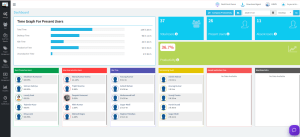
DeskTrack is automatic time tracking with project and task timesheets, activity reports and optional payroll and invoicing. It suits teams that want hours tied to projects without asking everyone to run timers all day.
Key features: automatic tracking, automated timesheets and approvals, idle time and app/URL tracking, reporting, mobile app.
Pros: Low entry price for automatic tracking. Timesheet approvals and reports are built in. The company is ISO 27001-certified.
Cons: It is monitoring-first, so you need a clear team policy. It is not a full task-board suite like ClickUp, and its integration list may be smaller than larger rivals.
Pricing: Plans start at $1.99 per user per month. See the pricing page for current tiers.
Best for: Agencies and service teams that want automatic timesheets and productivity analytics next to their current PM tool.
Tip: Use visible tracking mode and tell your team what’s collected.
2. Hubstaff
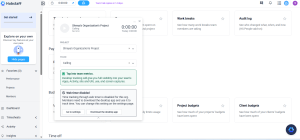
Hubstaff combines time tracking, optional screenshots and activity levels, scheduling and payroll. It’s a common pick for distributed agencies.
Key features: project budgets, invoicing, GPS (higher plans), 35+ integrations.
Pros: Strong budgeting and reporting, payroll and invoicing on higher tiers, and broad integrations.
Cons: Paid plans have a two-seat minimum. Some features need per-seat add-ons, and lower plans limit screenshots and app tracking.
Pricing: Free for one user. Starter is $4.99 per seat per month billed monthly. Grow is $7.50 and Team is $10.
Best for: Remote teams that bill clients by the hour.
3. Toggl Track

Toggl Track keeps tracking simple, and teams actually use it. Starter adds billable rates and project estimates. Premium adds profitability analysis.
Pros: Clean interface, fast setup, a free plan for up to five users, and strong profitability reports on Premium.
Cons: No built-in invoicing, Premium costs twice as much as Starter, and project management features are limited.
Pricing: Starter is $9 and Premium is $16 per user per month, billed annually.
Best for: Small teams that want a simple time tracker for project management without extra complexity.
4. Harvest
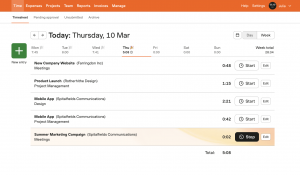
Harvest pairs time tracking with expenses and invoicing. The path from tracked hour to paid invoice is short.
Pros: Invoicing and expenses in one tool, easy for clients to understand, and a free tier for one seat and two projects.
Cons: It is timer-based with no automatic capture, light on task management, and the per-seat cost adds up.
Pricing: Teams plan from $9 per seat per month billed annually.
Best for: Freelancers and consultancies that invoice by the hour.
5. ClickUp
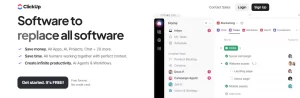
ClickUp is a task-first platform with native time tracking inside tasks. You get project management with time tracking without a second login.
Pros: A free plan with unlimited users, time tracking inside every task, and deep customization.
Cons: Setup takes longer and the learning curve is steeper. Advanced timesheets sit on higher tiers, and AI add-ons cost extra per user.
Pricing: Free. Unlimited is $7 per user per month. Business is $12 monthly.
Best for: Teams that want tasks, docs and hours in one workspace.
6. monday.com
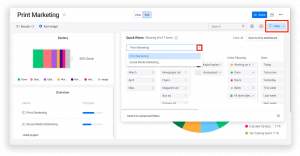
monday.com is visual and easy for non-technical teams. Native time tracking is on the Pro plan.
Pros: Clear boards, timelines and dashboards, strong automations, and good support for cross-department projects.
Cons: Time tracking needs the Pro plan. There is a three-seat minimum, seats sell in buckets, and costs climb with team size.
Pricing: Per seat per month, billed annually: Basic $9, Standard $12, Pro $19. Free plan for two seats.
Best for: Visual teams that need time data inside their workflow boards.
7. Jira
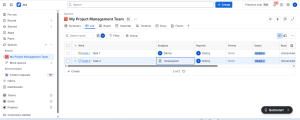
Jira is built for software teams. It logs work against issues, and apps like Tempo add richer timesheets.
Pros: Deep issue and sprint tracking, a large integration marketplace, and a free tier for small teams.
Cons: Real timesheets usually need a paid add-on. Invoicing and client billing are minimal, and it is overkill for non-technical teams.
Pricing: Free for small teams. Paid plans start around $8.58 per user per month.
Best for: Engineering teams already living in Jira.
8. Zoho Projects
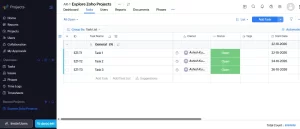
Zoho Projects includes timesheets, task management and billing. It’s an affordable option, especially if you use other Zoho apps.
Pros: Built-in timesheets and invoicing, a low entry price, and tight fit with the Zoho suite.
Cons: The interface feels dated to some users, there are
fewer third-party integrations than larger rivals, and reporting is less polished.
Pricing: Free plan available. Paid plans start around $2.95 per user per month.
Best for: Small businesses already in the Zoho ecosystem.
How to Choose the Right Project Management and Time Tracking Software
Start with how you earn money and how your team works:
- Solo or under five people: pick a free or low-cost plan. Toggl Track, Harvest or ClickUp’s free tier will do.
- Agencies billing clients hourly: you need rates, invoices and budgets. Hubstaff, Harvest and DeskTrack fit best.
- Remote or hybrid teams: automatic tracking and clear reports reduce guesswork. Be open about what you collect.
- Software and product teams: stay in Jira or ClickUp and add a time app.
- Larger teams (25+): check seat minimums, SSO, approvals and audit trails, then run a two-week pilot.
A few practical tips help whatever you pick. Pilot with one team on one real project, not a demo. Track adoption, because a tool nobody opens gives you no data. Decide upfront what counts as billable and how often people submit timesheets. And price the real cost, including add-ons, seat minimums and the paid tier your must-have feature sits on.
Comparison Table: Features Side by Side
| Tool | Tracking method | Billable rates / invoicing | Task boards | Free plan |
|---|---|---|---|---|
| DeskTrack | Automatic + manual | Yes | Yes | Free trial |
| Hubstaff | Automatic + timers | Yes | Add-on | 1 user |
| Toggl Track | Timers + auto-tracker | Rates yes, invoicing no | No | Up to 5 users |
| Harvest | Timers | Yes | No | 1 seat, 2 projects |
| ClickUp | Timers | Rates limited, no invoicing | Yes | Unlimited users |
| monday.com | Time column (Pro) | No | Yes | 2 seats |
| Jira | Work logs + apps | Via apps | Yes | Small teams |
| Zoho Projects | Timesheets | Yes | Yes | Yes |
Conclusion
Pick the Tool That Fits How You Bill and Work
The best project time tracking software is the one your team uses every day. Shortlist two or three tools, run a short pilot on a live project and compare the reports.
If you want automatic timesheets and clear productivity analytics, DeskTrack is worth a look. Start a free trial or book a demo to see it on your own project data.
Frequently Asked Questions
Q. What is the best project time tracking software?
Ans. There’s no single winner. Hubstaff and DeskTrack suit automatic capture. Toggl Track and Harvest suit simple timers and invoicing. ClickUp and monday.com suit teams that want tasks and hours together. Match the tool to team size, billing model and monitoring comfort.
Q. Is there free project management time tracking software?
Ans. Yes. ClickUp, Toggl Track, Harvest, Hubstaff and monday.com all have free plans. Limits differ: Toggl caps at five users, Harvest at one seat, and Hubstaff’s free plan covers one user. Check seat, project and report limits first.
Q. What’s the difference between time management software and time tracking software?
Ans. Time management software helps plan work, deadlines and schedules. Time tracking records how long work actually took. Project teams usually need both: plans set expectations, and tracked hours show whether the plan held against budget.
Q. Do I need project management and time tracking software in one tool?
Ans. Not always. All-in-one tools suit small teams that want fewer logins. Larger teams often pair a PM tool such as Jira with a dedicated tracker through integrations, which usually gives better timesheets and reporting.
Q. How does time tracking for project management improve profitability?
Ans. Comparing logged hours with budgets and billable rates shows which clients and tasks overrun. You can fix pricing, trim scope creep and bill every hour. Over a few projects, that data makes estimates more accurate.
Q. Is automatic time tracking legal and ethical?
Ans. Rules vary by country and state. Tell employees what’s tracked and why, get consent where required, and avoid hidden monitoring. Check local law such as GDPR with a professional. This is general information, not legal advice.
Q. How much does a time tracker for project management cost?
Ans. For the tools here, paid plans run roughly $1.99 to $19 per user per month. Watch for seat minimums, add-ons and feature gating. Annual billing usually lowers the monthly price.