Insubordination is just one word. However, it can be a big threat to the productivity and profitability of your organization. Furthermore, as simple as the problem is, the solution to it is not that simple, but you don’t need to panic. In this blog, we will tell you all about it and the best ways for you to replace it with subordination. The last method is 100% guaranteed to work. So, continue reading till the end.

What is Insubordination at Work?
Simply put, insubordination at work is when an employee or employees voluntarily or involuntarily deny a direct order, work request, company policy, etc. When employees defy, disobey, refuse, or ignore authority, then we call it insubordination. Overall, the worker will acknowledge the instruction. However, they won’t execute it or do things their own way. For this to occur, you need 3 things.
- The manager instructs the employee.
- The employee acknowledges it.
- The employee doesn’t execute the plan.
Moreover, here are a few more things you need to know about insubordination
- Insubordination can be verbal, physical, or attitudinal, showing no respect or compliance towards, which leads to disciplinary action, other consequences, or discontinuation.
- The tolerance level for this disobedience depends on the severity of the action and whether the employee repeats the behavior.
| For Example |
| You might accept a one-time polite refusal. However, if it keeps on repeating and getting louder over time, then some form of punishment is required. |
How Does Work Insubordination Affect Your Organization?
Active or passive insubordination can affect your organization and business productivity a lot more than you can think. Here’s why we are warning you.
1. Diminished Authority
Every time you neglect insubordination, your managers lose some of their authority. This leads to further challenges among employees. For example, who to seek when help is needed to make a big decision?
2. Negativizes Employee Morale
Any act of this offence can cause tension between employees and managers. Every time someone loyal witnesses or experiences this, it can harm employee morale and the workplace atmosphere altogether. Track what’s going on in your organization with project time tracking software to ensure that this doesn’t happen
3. Workflow Disruption
One act of disobedience from an employee leads to many bad things, such as inefficiency, delay, and stress for other team members.
4. Reputational Damage
If your managers keep getting ignored, it can seriously break your organization’s reputation. Overall, the result will be destroyed client relationships and heightened struggle while hiring new candidates.
5. Legal & Financial Ramifications
If insubordination at work is extremely offensive, it can also lead to financial or legal ramifications. For example, cases involving violence or harassment.
Read Also: What are Business Days: All You Need to Know About
Examples of Insubordination at Work
Here are a few real-life insubordination examples that will make the concept clearer.
- A call center representative ignoring their supervisor’s direct command to follow a preset script when talking to clients, again and again, is insubordination. This risks non-compliance with industry regulations.
- If a high school teacher at a private institution declines to submit lesson plans after multiple requests, this is insubordination because they don’t agree with the school’s curriculum standards.
- Another one of the insubordination examples would be of a healthcare IT technician refusing to install a security patch, which the manager compelled. Here, the expert arguing that the patch is unnecessary puts patient data at risk of theft.
- One of the oblivious insubordination is a machine operator refusing to continue production, ignoring their supervisor’s instructions to shut down their equipment during maintenance, despite the known hazard.
Causes of Work Insubordination

So, now we know what causes it and how it impacts your business. However, what causes insubordination at work? Let’s find out.
1. Communication Challenges
Firstly, you need to identify whether your employee understood the instruction or not. There can be any issue, including:
- Unclear instructions
- Misunderstandings in expectations
- Defective communication channels
- Language barriers
- Misinterpretation of feedback
2. No Workplace Respect
Insubordination is not always the employee’s fault. Sometimes, it’s you who is to blame. For instance, if employees don’t feel valued or respected at the workplace, they will surely disobey authority to take out their frustration.
3. Disagreement with Policies or Decisions
Specific policies or decisions that insult the employee’s personal beliefs will lead to strong disagreements. This results in severe levels of insubordination at work.
4. Personal Issues & External Stress
As we keep mentioning a lot, your employees also have a lot going on in their personal lives. At times, active or passive insubordination at work can happen when these issues clash with the profession, making work-life balance impossible to achieve.
Types of Insubordination at Work
You might experience 1, more, or all of these 5 types of insubordination at work.
1. Verbal Insubordination
- Straightforward Refusal: The employee simply says, I wouldn’t do it.
- Offensive Language: For instance, the employee insults the supervisor’s gender, race, or ethnicity.
- Insulting Statements: The employee says something along the lines of, Sure, because you can’t do it yourself.
- Mockery & Sarcasm: When the employee uses mockery to disagree with a work request.
- Abusive Language: Disrespectful, threatening, or discriminatory communication.
2. Disobeying Direct Orders
- Not Completing Tasks: The employee spends the workday on their personal tasks instead of work. You can identify this with the best employee monitoring software.
- Violating Policies: An employee chain-smoking in style while working despite the no-smoking policy.
- Disregarding Chain of Command: An employee going directly to the CEO to get a minor issue solved is insubordination.
- Employee Refusing: This is when employee (s) refuse to complete tasks that their managers assign.
3. Weakening Authority
- Public Humiliation: For instance, an employee mocks a manager’s competence by loudly disagreeing with their strategy in a meeting.
- Instructions Ignored: For example, although the manager instructed the employee to finish the client presentation, she or he didn’t do it, and also left the manager uninformed about it.
- Lack of Communication: This is when, for instance, an employee doesn’t reveal critical project updates, leading to confusion and delay.
- No Cooperation: This is when employees continuously ignore the manager’s emails, etc.
- Insubordination in Behavior: Employees refusing to follow directives or openly challenging their manager’s decisions.
4. Refusal to Perform Assigned Tasks
- Passive Insubordination or Resistance: Suppose you ask your employee to make a monthly report, but they delay it to the end of the month.
- Task Avoidance: An employee agrees to do a task, but doesn’t do it when the time comes for them to work.
- Redirecting Responsibilities: This is when an employee indefinitely delegates tasks to colleagues without proper authorization.
5. Gross Insubordination
- Threats of Violence: This is when an employee threatens to physically damage the manager during a disagreement.
- Public Refusal: This is when an employee openly disobeys the manager’s authority by not following a direct order.
- Work or Project Sabotage: This is equivalent to an insider threat as the employee knowingly misplaces project documents, which delays completion.
- Encouraging Organizational Disruption: This is equivalent to a protest because the employee encourages their colleagues to go against management.
How to Deal with Insubordination at Work?
Now that we know all about insubordination at the workplace, we are ready to work out a solution to it. Here’s what you need to do.
1. Document the Incident
Properly document the issue under the correct employee profile. This helps you keep an accurate record of which ones were solved and ensures that you can solve similar incidents faster. It also helps you track the number of instances of insubordination by the same team member.
2. Assess The Situation
Now, you need to know how severe or repetitive the case of disobedience is. Furthermore, don’t forget to find the cause of the problem to know who’s at fault.
3. Speak with the Employee
A wiser alternative is to have a one-on-one session with the employee where you communicate with them and not interrogate them. Chances are that the employee may open up when comforted and might even apologize, saying that they had issues that day.
4. Identify Solutions
Once you have collected employee confessions, you need to identify solutions that you and the worker (s) can agree upon. That is, unless the case is of a high level of insubordination, in which you need to punish the employee, such as discontinuing their services mid-contract.
5. Establish Consequences
After the employee confesses, tell them something like: I am letting you go this time. However, if it happens again, there will be consequences. Employees must know that they are bound by authority while in the organization, and the consequences for their offence can include:
- Fine
- Demotions
- Salary decrements
- Suspensions
- Terminations
6. Make Follow-Up & Action Plans
Next, you need to make follow-up and action plans to ensure that insubordination never happens again in your organization. For example, implementing software for screenshot monitoring and employee time management to track employee activities.
7. Provide Resources & Support
Improve your communication channels, train your managers, provide ample resources and support to employees for working properly, etc. You know the drill.
8. The 3 Warnings Rule
This is just like baseball, where 3 strikes and you are out. For your organization, your rule will be, if an employee is caught in 3 cases of insubordination, then they will be terminated. This instills respect, fear (a little is necessary), and accountability within employees.
9. If All Else Fails…
Use the 2F method to get rid of the problem.
- Finalize: Give the employee one more chance to rectify their mistakes.
- Finish: If they are still at it after that, ask them to either politely keep a signed resignation letter at your desk, or you will hand over their layoff letter.
Eliminate Insubordination & Boost Productivity with DeskTrack
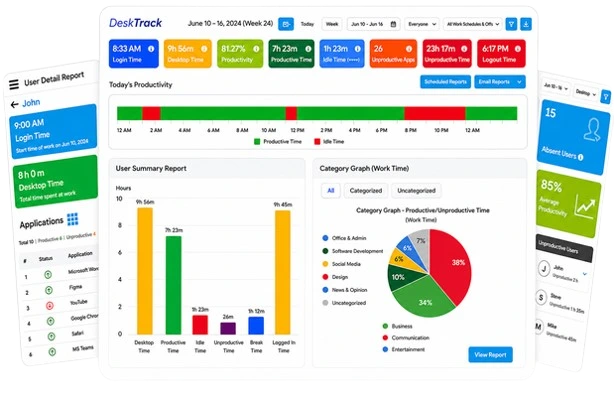
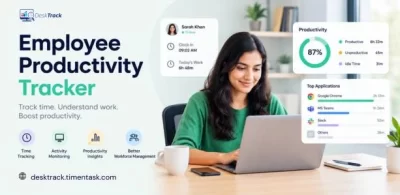
As we promised, here’s the best way to eliminate insubordination at work and maximize productivity. Trust us, you won’t even need to micromanage or do anything stupid. All you need to do is implement DeskTrack’s all-in-one project management, employee monitoring, productivity management, and time tracking software solution. Here’s how it works.
- Track employee activities with the real-time app, URL, and file usage monitoring feature.
- Detect insider threats with the screenshot monitoring functionality.
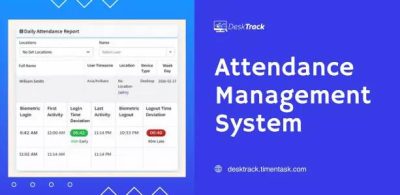
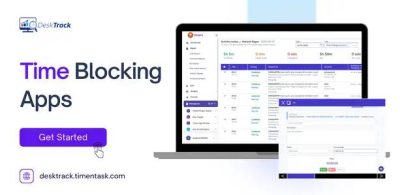
- Identify whether the employee is not following orders with the tool’s user-friendly project management dashboard and insights.
All these detailed logs help you get rid of insubordination before it gets big and maximize efficiency, productivity, and profitability. Try now and realize why 8000+ businesses around the world approve it as the best workforce management software.

Frequently Asked Questions (FAQ)
Q. What is Considered Insubordination at Work?
Ans. Insubordination at work is when an employee or employees voluntarily or involuntarily deny a direct order, work request, company policy, etc. When employees defy, disobey, refuse, or ignore authority, then we call it insubordination.
Q. Can I Give a Warning for Insubordination?
Ans. As a manager, you can not only warn your employee for active or passive insubordination at work, but you can also establish these things as consequences.
- Fine
- Demotions
- Salary decrements
- Suspensions
- Terminations
Q. Can I Be Fired for Insubordination?
Ans. Your employer can be okay with 1 or 2 cases of insubordination. However, more than that becomes extremely annoying, unproductive, and you could be finding another job in no time.