In the business world, every financial investment a company makes must be justified. When faced with the question of whether or not to adopt a timesheet program, the real issue isn’t easily palatable at all – will it make me more than it costs?” The direct answer to this question is certainly “yes,” but the real issue here is gaining a true and comprehensive understanding of what it really means to get an accurate read on your RoI.
The RoI of a timesheet application extends beyond simply tracking billable time. It goes further into the territory of identifying and exposing the wide but usually hidden costs of waste that plague every organization, from small shops to Fortune 500 companies.
In this post, we will take you through the standard methodology to calculate the RoI of a tool, such as DeskTrack. One step at a time. The approach: The same data-driven analysis that we use for our clients.
What Makes the Foundation of the Timesheet Program RoI
The highest untracked expense will be idle time. It includes more than employees browsing social media. A workday’s small, unproductive moments make up the total inactive hours. These can include:
- Waiting for approvals or information.
- Tab switching between tasks.
- Inefficient internal processes.
- Unproductive meetings.
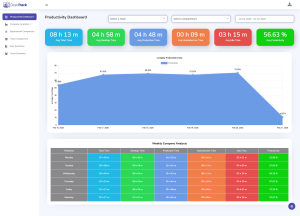
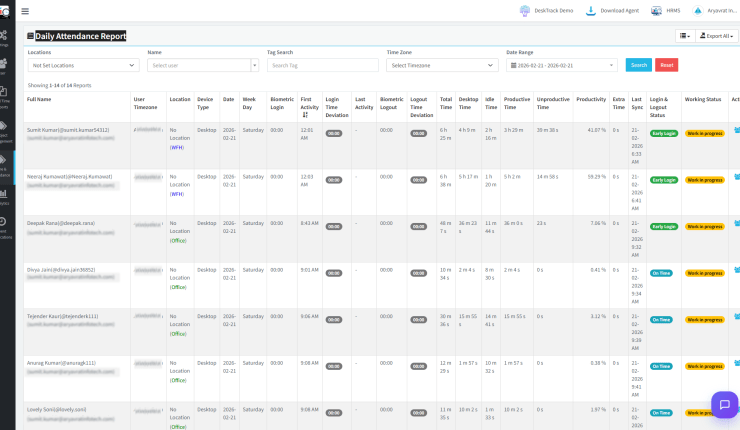
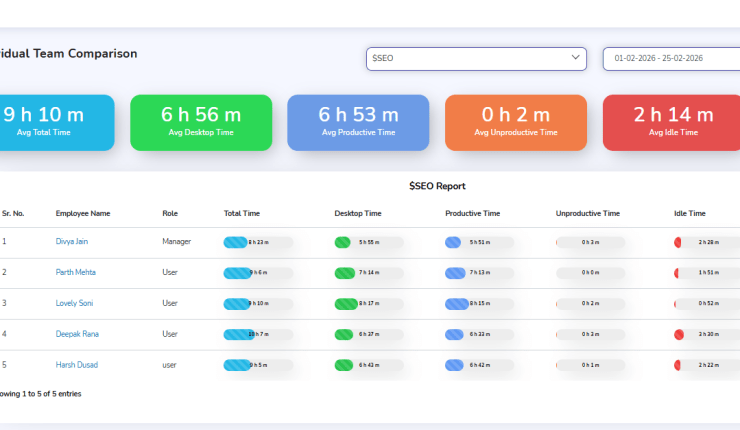
We analyzed an actual 31-employee business, which made us realize a 39% loss due to inactive hours. Overall, we now have our starting point for calculating RoI.
Step 1: Identify Your Yearly Expense of Inefficiency
First, we need to get our “money” part of the “time is money” phrase here. Let’s break it down into 3 simple sub-steps.
A. Calculate Your Average Hourly Rate
It adds something more to the salary of your employees. These amounts include benefits, payroll taxes, and overhead expenses. All you have to do here is divide your total overhead costs and annual payroll by your yearly work hours.
For instance, let’s assume the pay rate to be $6/hour.
B. Identify Your Yearly Lost Time
- No of employees: 31
- Day-wise work hours per employee: 8
- Total time per workday: 31 * 8 = 248 hours
- Idle time (%): 39%
- Day-wise lost time: 248 * 39% = 96.72 hours
- Yearly lost time (264 working days): 96.72 * 264 = 25534 hours
C. Determine Your Yearly Financial Expense
- Yearly cost of inefficiency: 25534 hours * $6/hour = ~$153204
The amount might shock you, but it’s real. Thankfully, you can reclaim this amount.
Read Also: How Timesheet Management Software Improves Work-Life Balance
Step 2: Identify The Efficiency Boost
You won’t be able to achieve zero idle time in your organization. However, you can reduce a bigger percentage of it. Using a robust timesheet program, you will get the data you need to identify the biggest productivity gaps that require filling. Moreover, your first-year goal must be to reduce 15% idle time.
- Yearly reclaimed hours: 25534 hours * 15% = 3,830 hours
- Yearly cost savings: 3830 hours * $6/hour = ~$22980
This is your “return” part of RoI
Step 3: Determine Your Total Investment
Now, we will calculate the total timesheet management software implementation cost.
- Annual software subscription: For a 31-user plan on DeskTrack ‘s time and productivity tracking software is around ~$1112.
- One-time implementation & training: Let’s take into account something around ~$556 for setup and team onboarding.
- Total First-Year Investment: ~$1112 + ~$556 = ~$1668.
Step 4: Final RoI & Payback Calculation
Now, it’s time for us to add up everything.
- Net yearly benefit: ~$22980 (value recovered) – ~$1668 (investment) = ~$21312.
- Business RoI (Net benefit / investment) * 100: (~$21312 / ~$1668) * 100 = 1176%.
The payback period is the time it takes for the investment to provide you with financial gains. Here’s how to calculate it:
- Payback period: (total investment / annual financial value recovered) * 12 months.
- Payback period (~$1668 / ~$22980) * 12 months: 0.94 months.
That’s less than one month to balance out on the initial amount invested.
What are the Other Benefits of a Timesheet Program?
If you thought the 1176% RoI was impressive enough, wait till we reveal the other ways a good timesheet application delivers value. Let’s jump right into it.
- Improved Project Profitability: Project time tracking helps you identify unprofitable clients or services, which improves price adjustment.
- Less Administrative Overhead: Payroll and timesheet automation saves dozens of monthly hours for your HR and finance department.
- No Time Theft: Although most of your employees are honest, you can’t rely on manual timesheets. On the other hand, automatic tracking recovers around 5-10% payroll expenses from inflated hours and buddy punching.
- Improved Future Estimates: Having a historical database of how long tasks actually take helps you make more accurate project bids and timelines. This improves profitability and client satisfaction.
Timesheet Program: A One-Time Investment for Multiple Returns
Calculating the RoI of a timesheet program is as simple as it can get, and the results are almost always overwhelmingly optimistic. It’s an investment that directly targets and eliminates your highest hidden cost: Time wastage. Plus, it returns many fold to your profits.
Think of a timesheet application as a high-yield investment instead of an expense: An investment in profitability, operational excellence, and efficiency.
Ready to Calculate Your Return on Investment?
Use our free online RoI calculator to realize how much you could be saving.
Frequently Asked Questions (FAQ)
timesheet-program
Ans. Other than social media scrolling, these things also add to your idle time.
- Waiting for approvals or information.
- Tab switching between tasks.
- Inefficient internal processes.
- Unproductive meetings.
Ans. Here’s how it works in 4 simple steps.
- Identify Your Yearly Expense of Inefficiency
- Identify The Efficiency Boost
- Determine Your Total Investment
- Final RoI & Payback Calculation
Ans. Other than giving you around a 400-1000% RoI boost, there are also other benefits of implementing timesheet software for businesses.
- Improved Project Profitability
- Less Administrative Overhead
- No Time Theft
- Improved Future Estimates