How Time Theft Silently Kills Your Profitability?
If you are a small business owner, every dollar and minute is significant. Still, an unseen and unheard threat pursues your productivity and profits like a shadow: Employee time theft. On the surface, it’s just an employee leaving a few minutes early. However, the big picture shows a staggering billion dollars in annual loss.
Let’s make it clearer with an example. According to biometrics, your employee left at 6:30 PM. However, their timesheet was manually logged out an hour later. Moreover, 50 minutes extra here and 20 minutes there can add up to 10-15 hours of monthly paid time stolen. Now, let’s presume that a few employees are exercising this. That’s an astounding ~$1100 annual expense.
If you are not cautious, time theft can cost US businesses ~$11 billion per year, accounting for 1-8% of an organization’s payroll costs. Given the competitive international market, this leak draws the line between expansion and reduction. The bottom line is that you need to prevent time fraud effectively, ethically, and in line with global standards with knowledge and actionable insights.
What is Time Theft?
Time theft, in simple words, is paying an employee for the time they did anything but work. While the word theft alone signals fraud, it’s important to differentiate between its 2 primary types.
| For example, buddy punching or filling timesheets incorrectly to rip you off the profits you should be earning. |
| For example, rounding off time or employees forgetting to clock out of a break. |
Although both lead to financial and productivity loss, you need to manage each one differently: I.e., disciplinary action against intentional time fraud, and systematic and educational measures against accidental theft.
Understanding Time Theft at Work: 5 Common Examples
Time fraud can happen due to various reasons under the camouflage of minor deviations. The first step to preventing it is recognizing these.
| Type of Time Theft | Description | Business Impact |
| Buddy Punching | One employee clocking for another. | Direct overpayment for unworked hours means that the time tracking system’s integrity is at fault. |
| Extended Breaks | Taking longer than allowed breaks, excessive smoking or coffee breaks, unauthorized personal errands during work hours. | Productivity loss, workflow, and team schedule disruption |
| Digital Distractions | Spending work time on social media, online shopping, or personal browsing. | Decreased focus and result quality due to potential misuse of resources |
| Remote Work Time Fraud | For example, working multiple jobs simultaneously or using mouse jiggling or similar automation tools to simulate activity. | Hard to detect productivity loss, security, and data risks |
| False Entries | Changing the values in timesheets. | Direct payroll inflation and legal risk due to inaccurate records. |
| Ghost Shifts | Automatic or remote clocking without working or being present on-site. | Employee unavailability |
| Mobile Clock misuse | Unauthorized location or in-transit clock-in. | Incorrect or no attendance data, leading to payroll inaccuracy. |
Read More : How Timesheet Software Can Fix Disorganized Time with 462% RoI
The Hidden Costs of Time Theft
Employee time theft costs you more than direct overpayment. It simply decays your organization from within.
| Loyal employees witnessing others slipping under the seniors’ noses for time clock theft feel a sense of reduced morale. This causes them to go with the flow, weakening your company culture. One employee stealing time at a time. |
| Every hour your employees spend not working is time they could have generated more revenue or interacted with customers. This slows down the project pace, reducing the business’s overall capacity. |
| Inaccurate time entries hold potential legal and compliance risk. Especially in countries with strict labor laws, such as the FLSA of the USA and the WTE of Australia. |

5 Actionable Strategies to Prevent Employee Time Theft
A transparent time theft policy, intelligent technology, and a culture of trust make up all you need to prevent employee time fraud.
1. Make a Comprehensive Time Theft Policy
As a part of the employee handbook, your written, signed, and transparent time theft policy is a great start to prevention. It includes a clear time theft definition, consequences, and acceptable time tracking methods. This ensures certainty, and all employees understand the rules.
2. Focus on Employee Trust & Engagement
Fostering a positive work atmosphere goes a long way. Valued, respected, and engaged employees rarely steal time. Concentrate on:
| Ensure that your employees get paid fairly and on time for their hard work. |
| Provide your employees with flexible shifts whenever possible, changing the focus from time spent to results delivered. This is a sure-shot way to prevent time theft, as there will be no need for such practices. |
| Directly and transparently talk with your employees about such problems. |
3. Implement “Right to Disconnect” Friendly Tracking
Since our approach is global, you must be aware of international labor laws. The ECJ makes it compulsory for EU employers to have a time tracking system. Likewise, countries, such as Australia have introduced the “Right to Disconnect” rule, preventing employers from fining employees for ignoring work calls outside work hours. Moreover, your time tracking solution must:
- Precisely log all work hours.
- Employee privacy and boundaries are of utmost importance, especially in remote settings.
4. Conduct Regular, Transparent Time Audits
Routine audits help quickly spot potential time theft trends. Look for inconsistencies, including:
- Consistent clock-in/out times to the minute
- Significant variations between time entries and output.
- Frequent gaps in work activities.
|
| Tell your employees that audits are a standard procedure for payroll accuracy. |
5. The DeskTrack Solution
A smart non-intrusive employee monitoring software like DeskTrack is the most effective solution to prevent time fraud of any kind. DeskTrack offers a clear data-driven view of work activity, directly addressing all the examples of time theft at work.
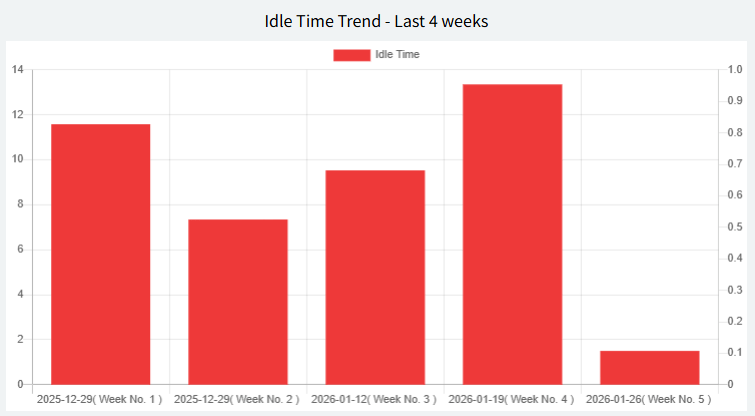
- Idle Time Reduced
Idle time tracking helps managers, such as you, differentiate between breaks and time fraud as it detects system inactivity in real-time.
- Efficient Workflows
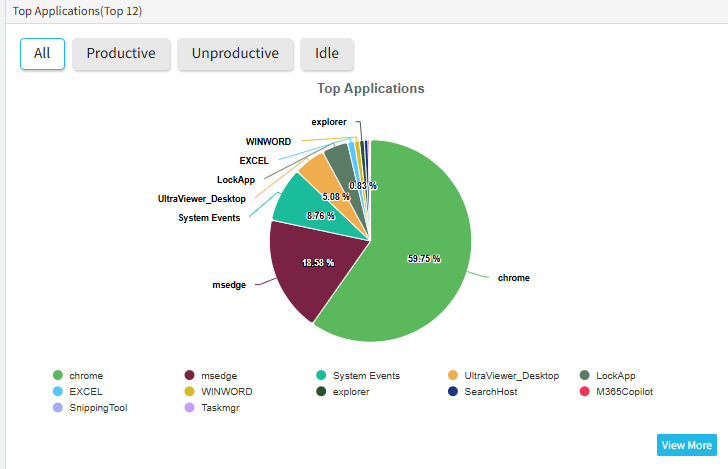
DeskTrack categorizes top applications and URLs into productive, unproductive, and uncategorized, providing actionable insights into the time spent on different activities.
- Attendance & Compliance Ensurance
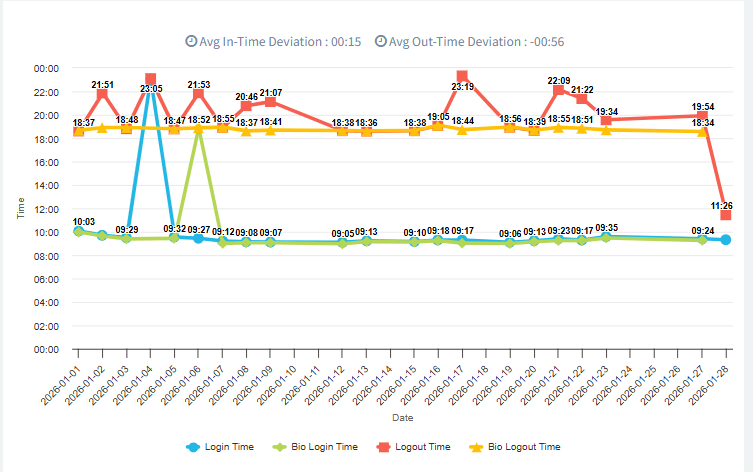
Detailed login/logout time deviation reports not only help you prevent time theft, but also provide proof for global labor law compliance and payroll accuracy
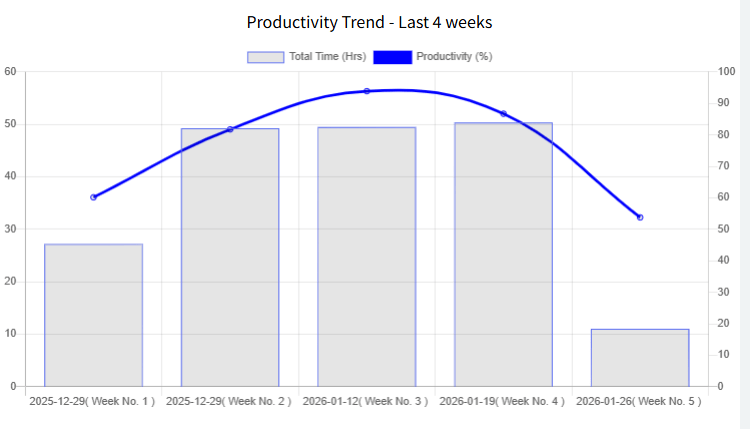
- Productivity Boosts
DeskTrack’s system productivity trend and monthly reports redirect the management’s focus to measurable results.
Ready to stop time theft and save on payroll?
Start your free 15-day DeskTrack trial today and see how much you can save.
Key Regional Differences for Global Compliance in 2026
Understanding how different geographical areas address employee time clock theft is crucial for expanding your business globally. For example:
| Region | Key Time Tracking Mandate/Trend | Implication for Small Businesses |
| European Union (EU) | ECJ compensates for an objective, reliable, and accessible system for daily time tracking. | Compulsory installation of a time tracking solution for all employees. |
| Australia | Stronger laws against wage theft (underpaying workers) and the new “Right to Disconnect” guidelines. | The requirement of time tracking for compliance. Employers must respect employees’ rights not respond to calls outside work hours. |
| The USA | FLSA requires accurate work-hour logs for non-exempt employees. | Clearly classify employees as exempt and non-exempt, and accrue overtime tracking. |
Finding the Right Balance Between Monitoring & Trust
Preventing employee time theft is not about transforming your small business into a security vault. The right way is to implement clear systems, leverage modern technologies, and build a work culture on trust and accountability. Drafting a clear time fraud policy and utilizing time tracking software, like DeskTrack, protects profits, ensures compliance, and empowers your employees to focus on what matters.
DeskTrack Replaces Time Theft with Efficient Work
DeskTrack tells you who is stealing work time and how much with comprehensive login/logout deviation and idle time tracking reports. Implement today and shift your focus on productive work that matters.